Αναζήτηση αυτού του ιστολογίου

Τετάρτη 15 Φεβρουαρίου 2023

Clinicopathologic Features and Frozen Diagnostic Pitfalls of Bronchiolar Adenoma/Ciliated Muconodular Papillary Tumors (BA/CMPTs)

AlexandrosSfakianakis shared this article with you from Inoreader
imageTo describe the histologic features of bronchiolar adenoma/ciliated muconodular papillary tumors (BA/CMPTs) and analyze the pitfalls in diagnosis from frozen sections. A total of 208 frozen and permanent sections of BA/CMPTs from Shanghai Chest Hospital from July 2018 to July 2021 were retrospectively analyzed. The median age of BA/CMPT patients was 65 years (15 to 79 y), and women accounted for 61.62% (122/198). The median size of BA/C MPTs was 0.6 cm (range 0.2 to 2 cm), of which 88.94% were small (≤1 cm, 185/208). In terms of location, the right lower lobe accounted for 44.23% (92/208), and the left lower lobe accounted for 33.65% (70/208). In 10 patients with 2 independent BA/CMPTs, 5 lesions were located in the left lower lobe and 4 in the right lower lobe. A total of 86.06% of the CT images of BA/CMPT showed solid/subsolid nodules (179/208). Among 208 tumors, 68.75% were distal type (143/208), and 31.25% were proximal type (65/208). The qualitative error rate of frozen sections was 21.33% (32/150), of which the distal type accounted for 75% (24/32); most of them were misdiagnosed as invasive adenocarcinoma during frozen diagnosis. The frozen diagnosis of BA/CMPTs might result in misdiagnosis as invasive adenocarcinoma. A careful search for characteristics of BA/CMPT, such as bilayer epithelial cells with basal cells and a lack of cellular atypia and invasive growth patterns, may be helpful fo r frozen diagnosis.
View on Web

Antimicrobial for 7 or 14 days for febrile urinary tract infection in men: a multicenter noninferiority double blind placebo-controlled, randomized clinical trial

AlexandrosSfakianakis shared this article with you from Inoreader

cid_ogimage.png

Abstract
Background
The optimal duration of antimicrobial therapy for urinary tract infections in men remains controversial.
Methods
To compare 7 days to 14 days total antibiotic treatment for febrile urinary tract infections in men, this multicenter randomized, double-blind placebo-controlled non-inferiority trial enrolled 282 men from 27 centers in France. Men were eligible if they had a febrile urinary tract infection and urine culture showing a single uropathogen.Participants were treated with ofloxacin or third generation cephalosporin at day 1, then randomized at day 3-4 to either continue ofloxacin for 14 days total treatment, or for 7 days followed by placebo until day 14.The primary endpoint was treatment success, defined as a negative urine culture, the absence of fever and of subsequent antibiotic treatment between the end of treatment and 6 weeks after day 1. Secondary endpoints included recurrent urinary tract infection within weeks 6 and 12 after day 1, rectal carriage of antimicrobial-resistant Enterobacterales and drug-related events.
Results
Two hundred and forty participants were randomly assigned to receive antibiotic therapy for 7 (115 participants) or 14 days (125 participants). In the ITT analysis, treatment success occurred in 64 participants (55.7%) in the 7-day group and in 97 participants (77.6%) in the 14-day group (risk difference-21.9 (-33.3 to -10.1)), demonstrating inferiority. Adverse events during antibiotic therapy were reported in four participants in the 7-day arm and seven in the 14-day arm. Rectal carriage of resistant Enterobacterales did not differ between both groups.
Conclusion
A treatment with ofloxacin for 7 days was inferior to 14 days for febrile UTI in men and should therefore not be recommended.
View on Web

Multiomics STEP up in correlative analysis of response to CAR T cells

AlexandrosSfakianakis shared this article with you from Inoreader

Nature Reviews Clinical Oncology, Published online: 15 February 2023; doi:10.1038/s41571-023-00742-5

Plasma cell-free DNA analysis has emerged as a powerful liquid biopsy assay to assess circulating tumour DNA in response to cancer treatments. A new study shows that cell-free DNA can also inform on expansion kinetics and tumour-infiltration patterns in patients receiving chimeric antigen receptor T cells and, together with circulating tumour DNA, provides vivid prognostic insights into intratumoural dynamics.
View on Web

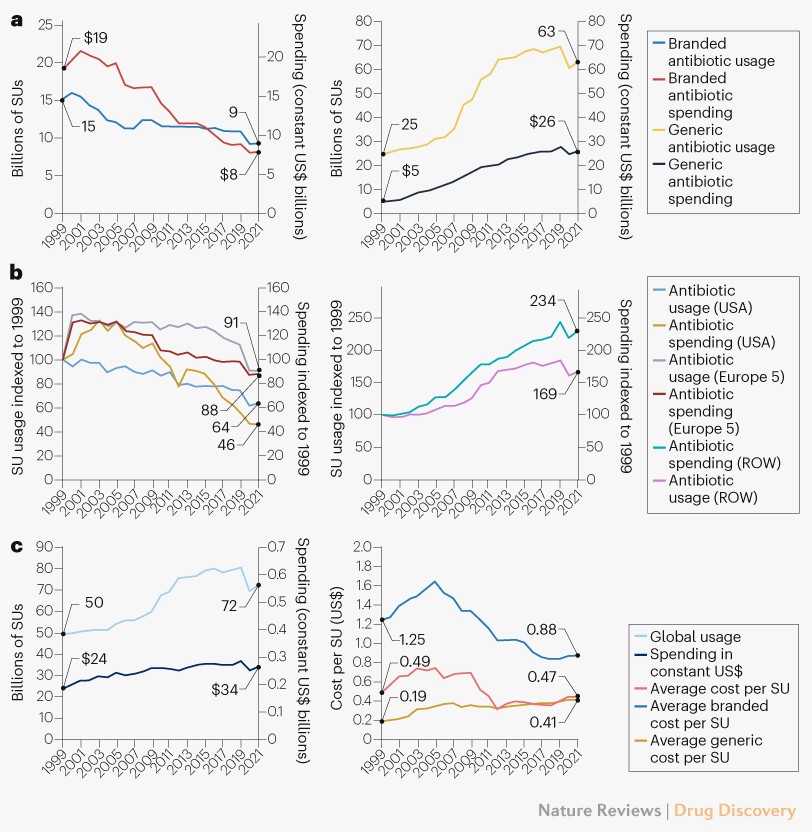
Trends in the global antibiotics market

AlexandrosSfakianakis shared this article with you from Inoreader

d41573-023-00029-5_24025932.jpg

Nature Reviews Drug Discovery, Published online: 15 February 2023; doi:10.1038/d41573-023-00029-5

Trends in the global antibiotics market
View on Web

Structural Analysis of MALAT1 long non-coding RNA in cells and in evolution [Article]

AlexandrosSfakianakis shared this article with you from Inoreader

Although not canonically polyadenylated, the long non-coding RNA MALAT1 (Metastasis Associated Lung Adenocarcinoma Transcript 1) is stabilized by a highly conserved 76 nucleotide triple helix structure on its 3' end. The entire MALAT1 transcript is over 8,000 nucleotides long in humans. The strongest structural conservation signal in MALAT1 (as measured by co-variation of base-pairs) is in the triple helix structure. Primary sequence analysis of co-variation alone does not reveal the degree of structural conservation of the entire full-length transcript, however. Furthermore, RNA structure is often context dependent; RNA binding proteins that are differentially expressed in different cell types may alter structure. We investigate here the in cell and cell free structures of the full-length human and green monkey (Chlorocebus sabaeus) MALAT1 transcripts in multiple tissue-derived cell lines using SHAPE chemical probing. Our data reveal levels of uniform str uctural conservation in different cell lines, in cells and cell free, and even between species, despite significant differences in primary sequence. The uniformity of the structural conservation across the entire transcript suggests that, despite seeing co-variation signals only in the triple helix junction of the lncRNA, the rest of the transcript's structure is remarkably conserved at least in primates and across multiple cell types and conditions.

View on Web

Τρίτη 14 Φεβρουαρίου 2023

Mitigating the return of acute respiratory virus infections

AlexandrosSfakianakis shared this article with you from Inoreader

8370.cover-source.jpg

Over the past two years, many countries have seen low levels of acute respiratory virus infection (ARVIs), a collective term for all respiratory viruses that infect humans, except for SARS-CoV-2. With the cessation of non-pharmacological interventions across many countries, SARS-CoV-2 continues to circulat e and the incidences of influenza, respiratory syncytial virus (RSV), and other respiratory viruses have increased this winter. For instance, Australia has recently experienced one of its most severe influenza seasons on record.1 In the US in November 2022, the Centers for Disease Control and Prevention (CDC) issued a health alert notice due to a surge in respiratory virus activity. Hospital admissions in the US related to influenza are at the highest levels in 10 years, and an early, severe spike in RSV cases resulted in considerable pressures on paediatric hospital beds.2There are several explanations for why this has happened. Firstly, most populations had little exposure to acute...
View on Web

Nonlinear absorption‐based analysis of energy deposition in melanosomes for 532‐nm short‐pulsed laser skin treatment

AlexandrosSfakianakis shared this article with you from Inoreader

Abstract

Background and Objectives

The clinical use of 532-nm short-pulsed lasers has provided effective treatment of epidermal pigmented lesions. However, the detection of significant differences in treatment effects between picosecond and nanosecond lasers has still varied among clinical studies. For robust evaluation of the differences based on the treatment mechanism, this study presents a nonlinear absorption-based analysis of energy deposition in melanosomes for 532-nm short-pulsed laser treatment.

Study Design/Materials and Methods

Nonlinear absorption by melanin is modeled based on sequential two-photon absorption. Absorption cross-sections and nonradiative lifetimes of melanin, which are necessary for the nonlinear absorption-based analysis, are determined from transmittance measurement. Using the model and parameters, energy deposition in melanosomes was calculated with varying fluence and pulse width settings, including actual clinical parameters.

Results

The energy deposition in melanosomes increased with shorter laser pulses, and subnanosecond laser pulses were found to be most efficient. The comparison of energy deposition calculated using clinical parameters demonstrated the differences in treatment effects between picosecond and nanosecond lasers reported in clinical studies.

Conclusion

The nonlinear absorption-based analysis provides quantitative evidence for the safety and efficacy evaluation of short-pulsed laser treatments, which may lead to the establishment of numerical indices for determining treatment conditions. Future studies considering the effects of the surrounding tissue on energy deposition in melanosomes will be needed.

View on Web

Evaluation of the effectiveness of maternal immunization against pertussis in Alberta using agent-based modeling: A Canadian immunization research network study

AlexandrosSfakianakis shared this article with you from Inoreader
via Vaccine

fbworm.png

CONCLUSIONS: Our model predicts significant reduction in future pertussis cases in infants due to maternal vaccination, with immunological blunting slightly moderating its effectiveness. The model is most sensitive to maternal vaccination coverage. The interruption of exposure pathways plays a role in the reduction of pertussis burden in infants due to maternal immunization. The effect of maternal immunization on population other than infants remains to be elucidated.PMID:36775775 | DOI:10.1016/j.vaccine.2022.12.071 (Source: Vaccine)
View on Web

Prognostic significance of soft tissue deposits in head and neck squamous cell carcinoma: a systematic review and meta-analysis

AlexandrosSfakianakis shared this article with you from Inoreader
Soft tissue deposits, also known as tumour deposits (TDs), have not been studied well in head and neck squamous cell carcinoma (HNSCC) and are not included in any of the staging systems or treatment guidelines. The aim of this systematic review was to determine the prevalence and prognostic implications of TDs in patients with HNSCC. This systematic review of the literature was conducted following the PRISMA guidelines. The PubMed, Embase, and Scopus electronic databases were searched for relevant studies, from inception to August 2022. (Source: International Journal of Oral and Maxillofacial Surgery)
View on Web

MRI Investigation of the Differential Impact of Left Ventricular Ejection Fraction After Myocardial Infarction in Elderly vs. Nonelderly Patients to Predict Readmission for Heart Failure

AlexandrosSfakianakis shared this article with you from Inoreader

Background

Patients with ST-segment elevation myocardial infarction (STEMI), especially elderly individuals, have an increased risk of readmission for acute heart failure (AHF).

Purpose

To study the impact of left ventricular ejection fraction (LVEF) by MRI to predict AHF in elderly (>70 years) and nonelderly patients after STEMI.

Study Type

Prospective.

Population

Multicenter registry of 759 reperfused STEMI patients (23.3% elderly).

Field Strength/Sequence

1.5-T. Balanced steady-state free precession (cine imaging) and segmented inversion recovery steady-state free precession (late gadolinium enhancement) sequences.

Assessment

One-week MRI-derived LVEF (%) was quantified. Sequential MRI data were recorded in 579 patients. Patients were categorized according to their MRI-derived LVEF as preserved (p-LVEF, ≥50%), mildly reduced (mr-LVEF, 41%–49%), or reduced (r-LVEF, ≤40%). Median follow-up was 5 [2.33–7.54] years.

Statistical Tests

Univariable (Student's t, Mann–Whitney U, chi-square, and Fisher's exact tests) and multivariable (Cox proportional hazard regression) comparisons and continuous-time multistate Markov model to analyze transitions between LVEF categories and to AHF. Hazard ratios (HR) with 95% confidence intervals (CIs) were computed. P < 0.05 was considered statistically significant.

Results

Over the follow-up period, 79 (10.4%) patients presented AHF. MRI-LVEF was the most robust predictor in nonelderly (HR 0.94 [0.91–0.98]) and elderly patients (HR 0.94 [0.91–0.97]). Elderly patients had an increased AHF risk across the LVEF spectrum. An excess of risk (compared to p-LVEF) was noted in patients with r-LVEF both in nonelderly (HR 11.25 [5.67–22.32]) and elderly patients (HR 7.55 [3.29–17.34]). However, the mr-LVEF category was associated with increased AHF risk only in elderly patients (HR 3.66 [1.54–8.68]). Less transitions to higher LVEF states (n = 19, 30.2% vs. n = 98, 53%) and more transitions to AHF state (n = 34, 53.9% vs. n = 45, 24.3%) were observed in elderly than nonelderly patients.

Data Conclusion

MRI-derived p-LVEF confers a favorable prognosis and r-LVEF identifies individuals at the highest risk of AHF in both elderly and nonelderly patients. Nevertheless, an excess of risk was also found in the mr-LVEF category in the elderly group.

Evidence Level

2.

Technical Efficacy

Stage 2.

View on Web