Αναζήτηση αυτού του ιστολογίου

Δευτέρα 25 Ιουλίου 2022

Epidemiology and genetic characterization of human metapneumovirus in pediatric patients

alexandrossfakianakis shared this article with you from Inoreader

Abstract

Human metapneumovirus (HMPV), which is distributed worldwide, is a significant viral respiratory pathogen responsible for causing acute respiratory tract infections (ARTIs) in children. The aim of the present study was to investigate the epidemiological and genetic characteristics of HMPV in pediatric patients in Hangzhou China following the peak of onset of COVID-19. A total of 1,442 throat swabs were collected from the pediatric patients with a diagnosis of ARTI from November 2020 to March 2021. The following viruses were detected by real-time PCR analysis: HMPV, RSV, adenovirus, hPIV1-3, influenza A, and influenza B. A two-step method was used to amplify the F genes of the HMPV-positive samples. Following sequencing, phylogenetic analyses were conducted using the MEGA version 7 software package. Among the 1,442 samples, 103 (7.14%) were positive for HMPV. No significant differences were observed in the gender distribution. The highest incidence of HMPV oc curred in children older than 6 years and the lowest was noted in children younger than 6 months. Lower respiratory tract infections were diagnosed at a higher rate than upper respiratory tract infections in HMPV-infected children. Only 10 HMPV-infected children (5.41%) were inpatients compared with 93 outpatients (7.39%). Co-infection was observed in 31 HMPV-positive samples including 24 samples of double infection and 7 samples of triple infection. A total of 61 F gene fragments of HMPV, which were approximately 727 bp in length were successfully sequenced. All the HMPVs belonged to the genotype B and were clustered into subgenotypes B1 (1.6%, 1/61) and B2 (98.4%, 60/61). A total of 4 specific amino acid substitutions were noted as follows: aa280, aa296, aa392, and aa396. These substitutions were present between sequences derived from the subgenotypes B1 and B2 in the fusion open reading frame from position 244 to 429. In conclusion, the present study provided significant informat ion regarding the epidemiological and genetic characteristics of HMPV in children living in Hangzhou. Following the first peak of the COVID-19 pandemic, HMPV was considered an important viral respiratory pathogen present in children with ARTI.

This article is protected by copyright. All rights reserved.

View on Web

Phase II study of intrathecal administration of trastuzumab in patients with HER2-positive breast cancer with leptomeningeal metastasis

alexandrossfakianakis shared this article with you from Inoreader
Abstract
Background
Patients with HER2-positive breast cancer (HER2+BC) develop central nervous system metastases twice as often as patients with luminal HER2-negative breast cancer. Leptomeningeal progression results in a drastically altered prognosis with limited therapeutic options. This phase II study was conducted in order to assess the efficacy of intrathecal (IT) trastuzumab in HER2+BC patients with leptomeningeal metastasis (LM), based on a phase I dose-escalation study that had determined the recommended weekly dose of 150 mg for phase II.
Methods
Eligible patients received weekly administrations of 150 mg of IT trastuzumab. The primary endpoint was clinical neurologic progression-free survival (LM-related-PFS) after 8 weeks. Overall survival (OS), toxicities and quality of life (QoL) were secondary endpoints.
Results
Among the 19 enrolled patients, 16 (84%) had concomitant brain metastases, 15 of them had re ceived prior radiotherapy to the brain. All patients had received at least one line of systemic anti-HER2 therapy.After 8 weeks, 14 patients (74%) were free of neurological progression. The median LM-related-PFS was 5.9 months and the median OS was 7.9 months. According to the QLQ-C30 and BN20 scales, the global health-related QoL status seemed preserved and no toxicity above grade 3 was observed.
Conclusions
Conducting studies on patients with LM poses significant challenges and ethical dilemmas inherent to this population. Despite some limits, this phase II study's findings in terms of clinical neurologic response and quality of life's control confirms weekly administration of 150 mg of IT trastuzumab as a valuable option for HER+BC patients with LM and support the interest for further investigations.
View on Web

Atypical TDP‐43 protein expression in an ALS pedigree carrying a p.Y374X truncation mutation in TARDBP

alexandrossfakianakis shared this article with you from Inoreader
Atypical TDP-43 protein expression in an ALS pedigree carrying a p.Y374X truncation mutation in TARDBP

In this study Cooper-Knock et al identified an autosomal dominant ALS pedigree associated with p.Y374X-TARDBP. In patient tissue the authors confirmed reduced TDP-43 protein expression, abnormal TDP-43 fragmentation and deficient TDP-43-mediated splicing. This work extends the phenotypes associated with TDP-43 mutations.


Abstract

We describe an autosomal dominant, multi-generational, amyotrophic lateral sclerosis (ALS) pedigree in which disease co-segregates with a heterozygous p.Y374X nonsense mutation within TDP-43. Mislocalization of TDP-43 and formation of insoluble TDP-43-positive neuronal cytoplasmic inclusions is the hallmark pathology in >95% of ALS patients. Neuropathological examination of the single case for which CNS tissue was available indicated typical TDP-43 pathology within lower motor neurons, but classical TDP-43-positive inclusions were absent from motor cortex. The mutated allele is transcribed and translated in patient fibroblasts and motor cortex tissue, but overall TDP-43 protein expression is reduced compared to wild-type controls. Despite absence of TDP-43-positive inclusions we confirmed deficient TDP-43 splicing function within motor cortex tissue. Furthermore, urea fractionation and mass spectrometry of motor cortex tissue carrying the mutation revealed atypical TDP-43 prote in species but not typical C-terminal fragments. We conclude that the p.Y374X mutation underpins a monogenic, fully penetrant form of ALS. Reduced expression of TDP-43 combined with atypical TDP-43 protein species and absent C-terminal fragments extends the molecular phenotypes associated with TDP-43 mutations and with ALS more broadly. Future work will need to include the findings from this pedigree in dissecting the mechanisms of TDP-43-mediated toxicity.

View on Web

A reappraisal of microbiome dysbiosis during experimental periodontitis”

alexandrossfakianakis shared this article with you from Inoreader

Abstract

Periodontitis is a chronic inflammatory disease associated with the presence of dysbiotic microbial communities. Several studies interrogating periodontitis pathogenesis have utilized the murine ligature-induced periodontitis (LIP) model, and have further examined the ligature-associated microbiome relying on 16SrRNA-based sequencing techniques. However, it is often very challenging to compare microbial profiles across studies, due to important differences in bioinformatic processing and databases used for taxonomic assignment. Thus, our study aim was to re-analyze microbiome sequencing data-sets from studies utilizing the LIP model, through a standardized bioinformatic analysis pipeline, generating a comprehensive overview of the microbial dysbiosis during experimental periodontitis.

We conducted a re-analysis of 16SrRNA gene sequencing datasets from 9 published studies utilizing the LIP model. Reads were grouped according the hypervariable region of the 16SrRNA gene amplified (V1-V3 and V4), preprocessed, binned into Operational Taxonomical Units (OTUs) and classified utilizing relevant databases. Alpha and beta-diversity analyses were conducted, alongside relative abundance profiling of microbial communities.

Our findings revealed similar microbial richness and diversity across studies, and determined shifts in microbial community structure determined by periodontitis induction and study of origin. Clear variations in the relative abundance of bacterial taxa were observed starting day 5 after ligation and onwards, consistent with a distinct microbial composition during health and experimental periodontitis. We also uncovered differentially represented bacterial taxa across studies, dominating periodontal health and LIP-associated communities.

Collectively, this re-analysis provides a unified overview of microbial dysbiosis during the LIP model, providing new insights that aim to inform further studies dedicated to unravelling oral host-microbial interactions.

This article is protected by copyright. All rights reserved

View on Web

Protein interactome mapping of Porphyromonas gingivalis provides insights into the formation of the PorQ‐Z complex of the type IX secretion system

alexandrossfakianakis shared this article with you from Inoreader

Abstract

Porphyromonas gingivalis is an anaerobic gram-negative human oral pathogen highly associated with the more severe forms of periodontal disease. P. gingivalis utilizes the type IX secretion system (T9SS) to transport ∼30 cargo proteins including multiple virulence factors to the cell surface. The T9SS is a multi-protein complex consisting of at least 19 proteins and recently we characterised the protein interactome of these components. Like the T9SS, almost all biological processes are mediated through protein-protein interactions (PPIs). Therefore, mapping PPIs are important to understand the biological functions of many proteins in P. gingivalis. Herein, we provide native migration profiles of over 1000 P. gingivalis proteins. Using the T9SS, we demonstrate that our dataset is a useful resource for identifying novel protein interactions. Using this dataset and further analysis of T9SS P. gingivalis mutants we discover new mechanistic insights into the formation of the PorQ-Z complex of the T9SS. This dataset is a valuable resource for studies of P. gingivalis.

This article is protected by copyright. All rights reserved

View on Web

Analysis of Th cell subsets in local and systemic environments from experimental periodontitis rats

alexandrossfakianakis shared this article with you from Inoreader

Abstract

Objectives: To explore the effect of periodontitis on Th cell subsets in local and systemic environments.

Methods: 32 male Sprague-Dawley rats were randomly divided into periodontitis and control groups. Silk ligatures were applied to the mandibular first (M1) molars in the periodontitis group. Inflammation and alveolar bone loss around the M1 molars were analyzed by histological staining and micro-computed tomography. The mRNA expression of IFN-γ, IL-4, IL-17 and IL-10 in the gingiva were detected by qRT-PCR. The proportions of Th1, Th2, Th17 and Treg cells in the submandibular lymph nodes, peripheral blood and jaw bone marrow were tested using flow cytometry.

Results: More inflammatory cells and alveolar bone resorption was found in the periodontitis group, with upregulated mRNA expression of IFN-γ, IL-17 and IL-10. The proportion of Th1 and Th17 cells was significantly elevated in submandibular lymph nodes, and the proportion of Th1, Th2 and Th17 cells was significantly elevated in peripheral blood, while the proportion of Th1, Th17 and Treg cells was significantly elevated in jaw bone marrow in the periodontitis group.

Conclusion: This study suggests periodontitis affects the differentiation of Th cell subsets in both local and systemic environments, resulting in an increased proportion of proinflammatory cells.

This article is protected by copyright. All rights reserved

View on Web

Circadian Pain Patterns in Human Pain Conditions – A Systematic Review

alexandrossfakianakis shared this article with you from Inoreader

Abstract

Background

Chronobiology is the science of how physiological processes in the body follow a pattern of time. Pain has been shown to follow a circadian rhythm, with different types of pain having variable expression along this rhythm.

Objective

This article reviews the nature of diurnal variations in pain along with a discussion of the mechanisms of circadian rhythm of pain.

Evidence Review

We conducted a literature search on the PubMed and Google Scholar electronic databases, through April 2022. Publications were screened for English language, full-text availability, and human subjects. Randomized controlled trials and observational trials were included. Data was extracted from studies on patients with acute or chronic pain phenotypes, which provide pain severity data and corresponding diurnal time points.

Findings

The literature search led to the inclusion of 39 studies. A circadian pattern of pain was found to be present in nociceptive, neuropathic, central and mixed pain states. Postoperative pain, fibromyalgia, trigeminal neuralgia and migraines were associated with higher pain scores in the morning. Temporomandibular joint pain, neuropathic pain, labor pain, biliary colic and cluster headaches increased throughout the day to reach a peak in the evening or night. Arthritis and cancer pain were not associated with any circadian rhythmicity. Furthermore, the circadian rhythm of pain was not found to be altered in patients on analgesics.

Conclusion

The results of this review suggest that an understanding of diurnal variation may help improve therapeutic strategies in pain management, for instance through analgesic titration.

View on Web

Presenting Symptomatology for Patients With Nasal Septal Perforation: Application of the NOSE‐Perf Scale

alexandrossfakianakis shared this article with you from Inoreader
Presenting Symptomatology for Patients With Nasal Septal Perforation: Application of the NOSE-Perf Scale

The NOSE-Perf scale is a patient-reported outcome measure specific to nasal septal patients. NOSE-Perf data are presented for a large heterogenous group of patients.


Objective

To objectively identify and quantitate presenting nasal symptoms in patients with a septal perforation using the validated NOSE-Perf scale.

Study Design

Case series retrospective review.

Methods

The medical records from August 2018 through January 2022 of patients at a tertiary care academic center with a septal perforation, and who completed the NOSE-Perf questionnaire, were reviewed. Perforation symptoms were identified and quantified using the 12-item NOSE-Perf scale (score range 0–48). NOSE-Perf findings were correlated to patient demographics, perforation etiology, and perforation length. NOSE-Perf scores of patients who pursued treatment were compared with those who did not.

Results

NOSE-Perf data were collected from 202 patients. Nasal crusting was noted in 94.1% of patients and was the most severe symptom reported (mean 2.9 of 4.0). Nasal congestion, difficulty breathing, and nasal obstruction followed in prevalence and severity. The mean total NOSE-Perf score was 23.7. Linear regression analysis demonstrated a weakly negative association of NOSE-Perf score with patient age and weakly positive association with increasing perforation length. NOSE-Perf scores were significantly higher in women and in patients pursuing treatment.

Conclusion

This is the first study to use the validated NOSE-Perf scale to objectively characterize and establish baseline septal perforation symptomatology. The NOSE-Perf scale can play a role in the standardization of perforation evaluation and treatment outcomes assessment. Laryngoscope, 2022

View on Web

Κυριακή 24 Ιουλίου 2022

Sustained within-season vaccine effectiveness against influenza-associated hospitalization in children: Evidence from the New Vaccine Surveillance Network, 2015-2016 through 2019-2020

alexandrossfakianakis shared this article with you from Inoreader
Abstract
Background
Adult studies have demonstrated within-season declines in influenza vaccine effectiveness (VE); data in children are limited.
Methods
We conducted a prospective, test-negative study of children 6 months–17 years hospitalized with acute respiratory illness at 7 pediatric medical centers during the 2015-2016 through 2019-2020 influenza seasons. Case-patients were children with an influenza-positive molecular test matched by illness onset to influenza-negative control-patients. We estimated VE [100% x (1 – odds ratio)] by comparing the odds of receipt of ≥1 dose of influenza vaccine ≥14 days before illness onset among influenza-positive children to influenza-negative children. Changes in VE over time between vaccination date and illness onset date were estimated using multivariable logistic regression.
Results
Of 8,430 children, 4,653 (55%) received ≥1 dose of influenza vaccine. On average, 48% were v accinated through October and 85% through December each season. Influenza vaccine receipt was lower in case-patients than control-patients (39% vs. 57%, p < 0.001); overall VE against hospitalization was 53% (95% CI: 46%-60%). Pooling data across 5 seasons, the odds of influenza-associated hospitalization increased 4.2% (-3.2%-12.2%) per month since vaccination, with an average VE decrease of 1.9% per month (n = 4,000, p = 0.275). Odds of hospitalization increased 2.9% (95% CI: -5.4%-11.8%) and 9.6% (95% CI: -7.0%-29.1%) per month in children ≤8 years (n = 3,084) and 9-17 years (n = 916), respectively. These findings were not statistically significant.
Conclusions
We observed minimal, not statistically significant within-season declines in VE. Vaccination following current ACIP guidelines for timing of vaccine receipt remains the best strategy for preventing influenza-associated hospitalizations in children.
View on Web

Nano or No-No? Hydroxyapatite Particle Size Matters…

alexandrossfakianakis shared this article with you from Inoreader

In this article, we're going to take a deep dive into hydroxyapatite. We'll cover what it is, how beneficial it is to help stop tooth decay, and the potential risks of nano-hydroxyapatite.

Fair warning, this article is going to be a deep dive that provides a lot of details about hydroxyapatite.

So if you're new here and you'd like a more high-level introduction to remineralization or hydroxyapatite's role in helping to stop and/or protect against tooth decay, these articles may be an easier read:

In 2016, we launched our Shine Remineralizing Tooth Whitening Powder, which contains naturally sourced hydroxyapatite (it's actually the #1 ingredient in Shine 🙂 ). Since then, many other companies have developed oral hygiene products using various forms of hydroxyapatite.

It makes sense that hydroxyapatite's popularity is on the rise. After all, the research clearly shows that hydroxyapatite protects against tooth decay just as well as (and sometimes even better than) fluoride.

However, like so many things in life, not all hydroxyapatites are created equal. The quality, quantity, and particle size of a product's hydroxyapatite can all make a big difference.

Speaking of particle size, the blogosphere has recently been abuzz with debates about the risks vs. benefits of nano-sized hydroxyapatite. So, we decided to provide more information so you can make up your own mind on this developing subject.

What is hydroxyapatite?

To start, let's make sure we're all on the same page.

Hydroxyapatite (high-drox-ee-appetite), is the chemical name for a molecule made up of calcium, phosphorus, oxygen, and hydrogen. For you scientists (or armchair scientific types, like me), the chemical composition is Ca5(PO4)3OH. However, since it shows up as a pair in nature, it's commonly notated as Ca10(PO4)6(OH)2. The word 'hydroxyapatite' is commonly abbreviated as HA.

The HA molecule is very important for oral care.

It's the primary building block that our teeth are made of.

But for decades, instead of focusing on hydroxyapatite, we've been taught that we need to use fluoride to prevent tooth decay. Leaning on our high school chemistry class, we might recall that fluoride is a halide, which means it's a super 'attractive' element.

When we introduce fluoride into the mouth, it binds with the calcium and phosphorus components of our teeth, which creates fluorapatite (note, not hydroxyapatite). However, our teeth do not naturally contain fluoride, and tooth decay is not the result of a fluoride deficiency. 

So, for the purposes of this article, we'll set aside fluoride. Instead, we'll anchor on the fact that our teeth are made of hydroxyapatite, which is why HA is such a supportive compound for tooth health.

Quick primer on particle size…

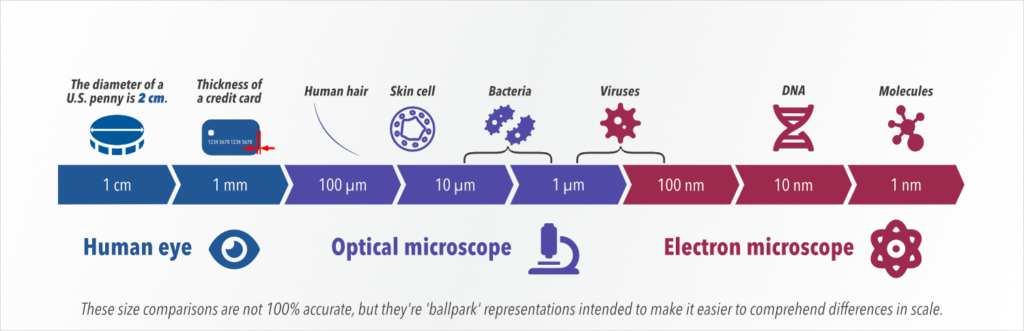
Particle sizes can be expressed using different units of measurement. For the size we'll be dealing with here, the metric system is generally used. We'll be talking in micrometers (also called microns) and nanometers. And for perspective, let's zoom out and start with millimeters.

Millimeters are the tiniest marks on a standard US/metric ruler. 10 millimeters = 1 centimeter, which is about ⅓ of an inch. 

(As a side note, if you've had a periodontal depth test, you probably know that the numbers the dentist calls out to the assistant are in millimeters. Any gum pocket that's deeper than 4 millimeters is problematic. Once gum pockets get deeper than that, it's difficult to effectively maintain healthy bacterial populations. Thankfully, there's a product solution that can help if you have deeper gum pockets. Now let's get back to measurements…)

There are 1000 micrometers in a millimeter. 

Stepping down another rung into the hard-to-imagine range, there are 1000 nanometers in 1 micrometer.

So, that means that there are one million nanometers in one millimeter. 

Here's the takeaway that will help simplify this: 'nano' is one thousand times smaller than 'micro'. 


So for example, something that's 5 micrometers in diameter could also be measured as 5000 nanometers. In other words, nanoparticles are WAY smaller than microparticles.

To look at it another way, if a golf ball were one nanometer in diameter, a micrometer would be nearly half a football field in diameter, and one millimeter would be just over 23 miles. So, nanometers are 1000 times smaller than micrometers, which are 1000 times smaller than millimeters.

Particle size matters…

Hydroxyapatite can come in many different particle sizes. For medical, dental, and oral supplement applications, particle sizes range from about 800 micrometers all the way down to 10 nanometers (80,000 times smaller).

To assist with optimal uptake in the mouth, we want the particle size to be pretty tiny. That way, it can go into suspension with our saliva and be available to deposit more minerals into and onto our teeth. (For more info on how this works with Shine, please take a look at this video.)

The naturally sourced hydroxyapatite we use in Shine is pharmaceutical-grade bone powder from grass-fed New Zealand cattle. 

(Incidentally, the same hydroxyapatite that we use is also used in the supplement field as a bioavailable source of calcium. In fact, there's substantial evidence that suggests that the body uptakes HA better than other forms of calcium.) 

We use the finest particle size our team can mechanically produce, which is right around 70 micrometers. To differentiate it from nano-HA, we refer to our hydroxyapatite as MCHA (microcrystalline hydroxyapatite) with the 'micro' distinguishing the particle size of the HA.

But if a tiny size is better, why not use the smallest possible particle size?

As we go from micrometers to nanometers, we have to think about what might happen in the body if we use an ingredient with such a tiny particle size.

Nano or no-no?

If you've been reading our material for a while, you already know that OraWellness is hardwired to a holistic paradigm. This affects many of our decisions, especially when it comes to product development.

When we were doing the R&D for Shine, we saw that the research literature supported using nano-HA for helping to restore demineralized areas in teeth. But we also saw some bad PR about nano-sized particles indiscriminately traveling throughout the body (due to their extremely tiny particle size).

In our opinion, nano-HA had two things going against it:

  1. The particle size was so tiny that the molecule was able to easily migrate throughout the body (for example, across the blood-brain barrier and even into the cellular structure), and literature was emerging that suggested that this wasn't safe.
  2. Nanoparticles are synthetically produced (not naturally derived).

So, with our holistic paradigm guiding us, we chose to apply the 'precautionary principle' and avoid nano-HA until we knew for certain that it was safe to use long-term.

(For more info on our thought process in these situations, check out our simple, two-step exercise that you can apply to any hygiene product to determine if it's holistic or not.)

What are the risks with nano-HA?

In the EU, there's a General Product Safety Directive that says, "Businesses must only place products which are safe on the market…" But, nano-HA hasn't been proven to be safe.

In fact, earlier this year, the European Union announced that it plans to ban several nano-sized materials (including nano-HA) for use in cosmetic and oral hygiene applications. Here's a link to the full report on nano-HA from the EU's Scientific Committee on Consumer Safety (SCCS).

The SCCS is especially concerned about the potential for nano-HA to damage cell DNA. The term they reference is 'genotoxic potential', which means the possibility for something (in this case, nano-HA) to damage the genetic information within a cell, causing mutations that may lead to cancer. 

In their report, the SCCS states, "Having considered the data provided, and other relevant information available in scientific literature, the SCCS cannot conclude on the safety of the hydroxyapatite composed of rod-shaped nanoparticles for use in oral-care cosmetic products at the maximum concentrations and specifications given in this Opinion. This is because the available data/information is not sufficient to exclude concerns over the genotoxic potential of HAP-nano."

And their hesitancy seems warranted for other reasons, too. Other studies point to issues like the risk that nano-HA may cause cellular breakdown in kidney cells and that it may even have a negative impact on human blood cells.

All of this provides plenty of reasons for us to continue to apply the precautionary principle and steer clear of nano-HA. 

But what does the SCCS think about NON-nano-HA?

In section 3.3.4 Assessment of the systemic toxicity of the non nanoform of HAP, the report says, "Calcium phosphate is a common mineral on earth and the most common calcium phosphate mineral is hydroxyapatite. Calcium phosphates have been generally recognized as safe (GRAS) in food by the FDA in 1975. Calcium phosphate is highly biocompatible in contact with hard tissue because the body is well accustomed to this mineral."

Thank goodness we can still benefit from using hydroxyapatite without the risks of using nanoparticles.

Is microcrystalline HA as effective as nano-HA?

There are two ways science seeks to prove or disprove any hypothesis: via clinical trials or via empirical evidence (any patterns or behaviors found during personal observation or experimentation).

Let's start with what the research currently says about the efficacy of micro-HA.

To our knowledge, there are no research studies comparing different sizes of HA against one another. Here's a study that mentions both micro- and nano-HA, but we haven't yet found data that compares the efficacy of various particle sizes of HA.

However, here's a well-done study that compares micro-HA to the gold standard of conventional dentistry: 1400 ppm (particles per million) fluoride. The researchers chose to study individuals with braces (which is a group that's at high risk for decay). Here's the takeaway:

"In highly caries-active patients, the impact of the regular use of a microcrystalline HAP dentifrice [toothpaste] on caries [cavities] progression is not significantly different from the use of a 1400 ppm fluoride toothpaste."

At first blush, that might not sound very noteworthy. But, the data in that study actually shows that the participants who used a micro-HA toothpaste had less decay than those who used a fluoride-based toothpaste.

And, this one-year, double-blinded, randomized controlled trial tested whether micro-HA protects children against early cavities as effectively as fluoride-based toothpaste. It found, "This RCT [randomized controlled trial] showed for the first time, that in children, the impact of the daily use of a toothpaste with microcrystalline hydroxyapatite on enamel caries progression in the primary dentition is not inferior to a fluoride control toothpaste."

And what about empirical evidence?

Well, we have plenty of that from the thousands of testimonials we've received from you, our community, through the years since we launched Shine, our remineralizing tooth whitening powder with MCHA.

We love all of the testimonials we regularly receive. Some of them are jaw-droppers, like this one:


"I just found out one of the reasons I struggled with cavities for years: I have an autoimmune disease which causes dry mouth, and was depleted by stress and further health issues. I ended up with 11 cavities a few years ago despite great oral hygiene. I finally ordered many of your products at that time, including several containers of Shine.

Within 3 months, 10 of the cavities were gone and only the oldest deepest one needed a filling. The hygienist thought I must have had those cavities filled elsewhere as they were gone.

I have continued to use your products, and in the 3 years since then, have no new cavities, continued great gum health, and very little plaque at my dental visits. I love the smooth feel of the oil blend on my teeth, and it feels good to know that I can prevent cavities despite this autoimmune condition. Thank you!"

– Tara B. from Canada< /h2>

This is empirical evidence, plain and simple. And we're honored that so many of you have used our product solutions to create greater oral health for yourself. That's dental self-empowerment.

Wrapping up…

Thanks for joining us for this fascinating deep dive on hydroxyapatite and particle sizes. For more information on hydroxyapatite as well as other in-the-mouth and whole-body strategies for helping teeth remineralize, feel free to download our free eBook, How to Stop Tooth Decay and Remineralize Your Teeth.

What about you, what are your thoughts on nano- vs. microparticles? Are the benefits of using nano-HA greater than the risks? Ultimately, it becomes a personal value judgment. We hope this information helps you to make educated decisions on what ingredients to use in your oral hygiene strategy. Please share your thoughts and experiences in the comments below so we can all learn from each other.

Helpful, related resources:

Other resources:

The post Nano or No-No? Hydroxyapatite Particle Size Matters… appeared first on OraWellness.

View on Web