Αναζήτηση αυτού του ιστολογίου

Τρίτη 19 Ιουλίου 2022

The malignant property of circHIPK2 for angiogenesis and chemoresistance in non-small cell lung cancer

alexandrossfakianakis shared this article with you from Inoreader

1-s2.0-S0014482722X00141-cov150h.gif

Publication date: Available online 19 July 2022

Source: Experimental Cell Research

Author(s): Mingming Ren, Xiang Song, Jieting Niu, Guojie Tang, Zhen Sun, Yanguang Li, Fanyi Kong

View on Web

Orthopedic Surgery Causes Gut Microbiome Dysbiosis and Intestinal Barrier Dysfunction in Prodromal Alzheimer Disease Patients: A Prospective Observational Cohort Study

alexandrossfakianakis shared this article with you from Inoreader
imageObjective: To investigate gut microbiota and intestinal barrier function changes after orthopedic surgery in elderly patients with either normal cognition (NC) or a prodromal Alzheimer disease phenotype (pAD) comprising either subjective cognitive decline (SCD) or amnestic mild cognitive impairment (aMCI). Background: Homeostatic disturbances induced by surgical trauma and/or stress can potentially alter the gut microbiota and intestinal barrier function in elderly patients before and after orthopedic surgery. Methods: In this prospective cohort study, 135 patients were subject to preoperative neuropsychological assessment and then classified into: NC (n=40), SCD (n=58), or aMCI (n=37). Their gut microbiota, bacterial endotoxin (lipopolysaccharide), tight junction (TJ) protein, and inflammatory cytokines in blood were measured before surgery and on postsurgical day 1, 3, and 7 (or before discharge). Results: The short-chain fatty acid (SCFA)-producing bacteria were lower while the gram-negative bacteria, lipopolysaccharide and TJ were higher preoperatively in both the SCD and aMCI (pAD) groups compared with the NC group. After surgery, a decrease in SCFA-producing bacteria, and an increase in both gram-negative bacteria and plasma claudin were significant in the pAD groups relative to the NC group. SCFA-producing bacteria were negatively correlated with TJ and cytokines in pAD patients on postsurgical day 7. Furthermore, surgery-induced perioperative metabolic stress and inflammatory responses were associated with gut microbiota alterations. Conclusions: Surgery exacerbates both preexisting microbiota dysbiosis and intestinal barrier dysfunction in pAD patients, all of which may be associated with systemic inflammation and, in turn, may lead to further cognitive deterioration.
View on Web

NUT carcinoma of the mandible in a child: case report and systematic review

alexandrossfakianakis shared this article with you from Inoreader
This report illustrates the management of mandibular NUT carcinoma in a pediatric patient, complemented by a systematic review of head and neck NUT carcinoma. A 5-year-old female presented with an enlarging jaw mass that was diagnosed as BRD4-NUTM1 carcinoma and was treated with hemimandibulectomy and chemoradiation. (Source: International Journal of Oral and Maxillofacial Surgery)
View on Web

Δευτέρα 18 Ιουλίου 2022

Allopurinol‐induced Stevens‐Johnson syndrome and toxic epidermal necrolysis: Signal detection and preventability from Vietnam National pharmacovigilance database

alexandrossfakianakis shared this article with you from Inoreader
Allopurinol-induced Stevens-Johnson syndrome and toxic epidermal necrolysis: Signal detection and preventability from Vietnam National pharmacovigilance database

Among 72,822 spontaneous ADR reports submitted to the Vietnam National Drug Information and Adverse Drug Reaction Monitoring Centre, 392 reports were on SJS/TEN, of which, 65 cases (16.6%) were related to allopurinol. The signals of allopurinol-induced SJS/TEN in Vietnam started in 2014 (ROR of 3.531, 95% CI: 1.830–6.810) and annually increased until 2019 (ROR of 11.923, 95% CI: 8.508–16.710). The preventability assessment showed that no allopurinol-induced SJS/TEN case was definitely unpreventable. 61.6% of the SJS/TEN cases were avoidable because they were associated with inappropriate prescribing such as unapproved indications, too high initial dose and even rechallenging in patients with a history of allopurinol allergy.


Abstract

What Is Known and Objective

Allopurinol, the first-line medication for hyperuricemia is well-known for its association with severe cutaneous adverse reactions, especially Stevens-Johnson syndrome (SJS) and toxic epidermal necrolysis (TEN). In the current study, we analysed the Vietnamese spontaneous reporting database to identify signals and preventability of allopurinol-induced SJS/TEN in Vietnam from 2010 to 2019.

Methods

Signal generation was assessed using the case/non-case method. Reporting odds ratios (RORs) and 95% confidence intervals (95% CI) were calculated.

Results

Among 72,822 spontaneous ADR reports submitted to the Vietnam National Drug Information and Adverse Drug Reaction Monitoring Centre, 392 reports were on SJS/TEN, of which, 65 cases (16.6%) were related to allopurinol. The signals of allopurinol-induced SJS/TEN in Vietnam started in 2014 (ROR of 3.531, 95% CI: 1.830–6.810) and annually increased until 2019 (ROR of 11.923, 95% CI: 8.508–16.710). The preventability assessment showed that no allopurinol-induced SJS/TEN case was definitely unpreventable. 61.6% of the SJS/TEN cases were avoidable because they were associated with inappropriate prescribing such as unapproved indications, too high initial dose and even rechallenging in patients with a history of allopurinol allergy.

What Is New and Conclusion

The signals of allopurinol-induced SJS/TEN in Vietnam started in 2014 and annually increased until 2019. Our first report specifically focusing on the ADR preventability of allopurinol showed that correction of medical errors relating to prescription could prevent more than 60% of SJS/TEN cases in Vietnamese allopurinol users. This is a feasible and practical solution, provided that there would be a systematic change in both healthcare systems and public awareness.

View on Web

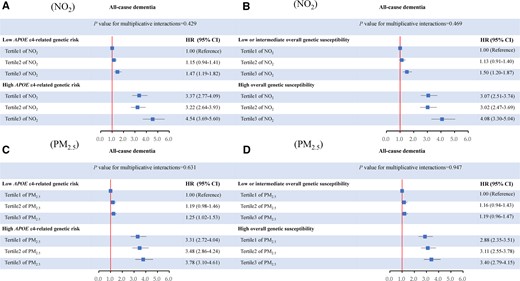
Long-term exposure to low-level air pollution, genetic susceptibility and risk of dementia

alexandrossfakianakis shared this article with you from Inoreader

m_dyac146f1.jpeg?Expires=1721224181&Sign

Abstract
BackgroundWe aimed to assess the association between low-level air pollution and the risk of dementia, and examine the modification effect by genetic susceptibility on the relationship.
Methods
A total of 164 447 participants who were free of dementia at baseline and aged ≥60 years were included. Annual average concentrations of particulate matter (PM) with diameters of ≤2.5 μm (PM2.5), between 2.5 and 10 μm (PMcoarse), PM2.5 absorbance and nitrogen dioxides (NO2) were evaluated using the Land Use Regression models. Cox proportional hazards regression was used to estimate the association between air pollutants and incident dementia.
Results
The adjusted hazard ratio (HR) of dementia for a 5-μg/m3 increase in NO2 was 1.09 (95% CI, 1.05–1.14); the adjusted HR of dementia for a 1-μg/m3 increase in PM2.5 was 1.10 (1.04–1.17). Such significant associations were present even within concentration ranges well below the present World Health Organization, US and European annual mean limit values. In addition, higher PM2.5 absorbance, a marker closely related to motorized traffic, was associated with higher risk of dementia. We found the risk of dementia associated with a combination of air pollutants (NO2 or PM2.5) and high genetic susceptibility (APOE-ε4 alleles or overall genetic susceptibility) was greater than the addition of the risk associated with each individual factor, indicating significant interactions on an additive scale (all P-interaction < 0.05).
Conclusion
Long-term exposure to PM2.5 or NO2, even at relatively low levels, is associated with a higher risk of dementia. Air pollution may additively interact with the genetic susceptibility on dementia risk.
View on Web

Outcomes of Bebtelovimab and Sotrovimab Treatment of Solid Organ Transplant Recipients with Mild‐to‐moderate COVID‐19 during the Omicron Epoch

alexandrossfakianakis shared this article with you from Inoreader

Abstract

Background

: Solid organ transplant recipients (SOTR) are at high-risk for severe infection from severe acute respiratory syndrome coronavirus 2 (SARS-CoV-2). Anti-spike monoclonal antibodies are currently utilized under emergency use authorization to prevent hospitalization in high-risk individuals with coronavirus disease-2019 (COVID-19), including SOTRs. However, clinical data for bebtelovimab, the sole currently available anti-spike monoclonal antibody for COVID-19, is limited.

Methods

: We conducted a retrospective cohort study of adult SOTRs diagnosed with mild-to-moderate COVID-19 from January 2022 through May 2022 who received either bebtelovimab or sotrovimab. The primary outcome was COVID-19-related hospitalization within 30 days of COVID-19 diagnosis. Data were analyzed with Fisher's exact test.

Results

: Among 361 SOTRs, 92 (25.5%) received bebtelovimab and 269 (74.5%) received sotrovimab. The most common organ transplant was kidney (42.4%). SOTRs who received bebtelovimab had a higher proportion who had received a booster SARS-CoV-2 vaccine dose and had received their last vaccination dose more recently. Eleven (3.0%) SOTRs were hospitalized, and rates of hospitalization were similar between monoclonal antibody groups (3.3% versus 3.0%; p>0.99). Three patients required admission to an intensive care unit, all who received sotrovimab. Four (1.1%) patients died within 30 days of COVID-19 diagnosis, two from each group.

Conclusions

: SOTRs with mild-to-moderate COVID-19 who received bebtelovimab had similar rates of COVID-19-related hospitalization as those who received sotrovimab. While differences in vaccination rates and viral subvariants could act as confounders, bebtelovimab appears to be of similar effectiveness as sotrovimab.

This article is protected by copyright. All rights reserved

View on Web

How flu-like syndromes contribute to termination of weekly rifapentine-based TB preventive therapy is still poorly predictable

alexandrossfakianakis shared this article with you from Inoreader

cid_ogimage.png

View on Web

Gestational Weight Gain and Birth Outcomes: A Comparison of Methods to Account for Gestational Age

alexandrossfakianakis shared this article with you from Inoreader

aje_ogimage.png

Abstract
Cross-sectional studies of total gestational weight gain (GWG) and perinatal outcomes have used different approaches to operationalize GWG and adjust for gestational duration. Using birth records from California (2007-2017), Nevada (2010-2017), and Oregon (2008-2017) we compared three commonly used approaches to estimate associations between GWG and cesarean delivery (C-section), small for gestational age (SGA), and low birth weight (LBW)]: (1) the Institute of Medicine r ecommended GWG ranges at a given gestational week, (2) total weight gain categories directly adjusting for gestational age as a covariate, and (3) weight-gain-for-gestational-age z-scores derived from an external longitudinal reference population. Among 5,461,130 births, the three methods yielded similar conclusions for C-section and SGA. However, for LBW, some associations based on z-scores were in the opposite direction of methods 1 and 2, paradoxically suggesting higher GWG increases risk of LBW. This was due to a greater proportion of preterm births among those with high z-scores, and controlling for gestational age in the z-score model brought the results in line with the other methods. We conclude that the use of externally-derived GWG z-scores based on ongoing pregnancies can yield associations confounded by duration of pregnancy when the outcome is strongly associated with gestational age at delivery.
View on Web

Κυριακή 17 Ιουλίου 2022

The use of scaffolds and regenerative materials for the treatment of immature necrotic permanent teeth with periapical lesion: Umbrella review

alexandrossfakianakis shared this article with you from Inoreader

Abstract

Background

Current treatment of immature necrotic permanent teeth with a periapical lesion is regenerative endodontics, which is based on tissue engineering under the triade of stem cells, scaffolds and bioactive molecules.

Objectives

This Umbrella Review was aimed to evaluate the success of scaffold and regenerative materials used for the treatment of these teeth, in terms of apical closure, tooth length increase, widening of root canal walls, tissue vitality and periapical lesion repair.

Methods

An extensive literature research was carried out in the Medline, ISI Web of Science, and Scopus databases for relevant systematic reviews matching the keyword search strategy. Based on inclusion and exclusion criteria, reviewers independently rated the quality of each study to determine their level of evidence. Methodological quality assessment of each article was obtained using A Measurement Tool to Assess Systematic Reviews (AMSTAR)-2 tool, and risk of bias was assessed with the Risk of Bias in Systematic Reviews (ROBIS) tool.

Results

After removing duplicates, 155 articles were found; from which 133 were excluded for being non-relevant and 15 other due to exclusion criteria. One more was discarded after methodological quality evaluation, for a total of 6 articles remaining. The most common scaffold used was the blood clot, others used were poly lactic-co-glycolic acid (PLGA) and platelet-rich fibrin matrix (PRFM). The most common regeneration material used was Mineral Trioxide Aggregate (MTA), followed by Biodentine. An increase in tooth length and widening of root canal walls were reported in all selected studies with different proportions, as well as periapical lesion repair. ROBIS analysis showed that only one article had low bias, two were classified as unclear bias, while the remaining three had high risk of bias.

Discussion

An exhaustive literature search was carried out applying language filters, high-quality indexed journals, year of publication, which ensures the best quality articles were included. Blood clot was the most used scaffold as is the most easy to place inside the canal and does not require to extract blood from the patient. The use of MTA and Biodentine as sealing materials has been associated with thickening of canal walls, apical closure and reduced signs and symptoms of apical periodontitis. However, most of the included reviews assessed were case reports and only in a few of them were clinical trials included. There is also a lack of risk of bias analysis in most reviews.

Conclusion

The blood clot is the most common scaffold used for inducing regeneration during the treatment of immature necrotic teeth. Tooth length increase and widening of root canal walls are the most common criteria used in the studies as success indicators. MTA and Biodentine did not show differences in the results analysed. Quality assessment and bias risk evaluation showed that it is necessary to design better studies with rigorous methodology to recommend a trustable and predictable protocol for the treatment of immature necrotic permanent teeth with periapical lesions.

View on Web

Nutrition Education: Optimizing Preparation and Recovery for Benign Esophageal Surgery

alexandrossfakianakis shared this article with you from Inoreader

Abstract

Background

Patients requiring upper gastrointestinal surgery for benign esophageal conditions are at nutrition risk before and after surgery. There is a dearth of published evidence guiding clinicians on effective collaboration with patients to mitigate perioperative nutritional challenges. We conducted a qualitative study to explore patients' perioperative food, nutrition, and educational experiences to guide future care.

Methods

Adult patients who had undergone elective, benign esophageal surgery were invited to participate in semi-structured interviews within 3 weeks of hospital discharge. Interviews were transcribed and analyzed with a reflexive form of inductive thematic analysis in addition to synthesized member checking.

Results

Interviews with 12 patients identified three major themes. First, nutrition education fosters a better surgical recovery experience: patients expressed a desire to be prepared for their upcoming surgery a nd engage in the recovery process with informed food choices. Most patients preferred preoperative education given limited capacity for learning during hospital admission. Second, patients have priorities for nutrition information: patients expressed that educational material should be printed, comprehensive, practical, include familiar foods, and focus on managing postoperative physical symptoms. Third, food impacts social and emotional experiences of surgery: resumption of a normal diet was a sign of recovery that enabled social reintegration. Identified themes resonated with Knowles' six-core principles of andragogy.

Conclusions

Patients with benign esophageal conditions perceived nutrition education to be a vital aspect of surgical preparation and recovery. Re-designing perioperative education with patient input has the potential to improve outcomes and experiences.

This article is protected by copyright. All rights reserved.

View on Web