Αναζήτηση αυτού του ιστολογίου

Τετάρτη 11 Νοεμβρίου 2020

A Functional Variant on 20q13.33 Related to Glioma Risk Alters Enhancer Activity and Modulates Expression of Multiple Genes

Alexandros G.Sfakianakis shared this article with you from Inoreader
Μέσω Human Mutation

ABSTRACT

Genome‐wide association studies (GWAS) have identified SNPs associated with glioma risk on 20q13.33, but the biological mechanisms underlying this association are unknown. We tested the hypothesis that a functional SNP on 20q13.33 impacted activity of an enhancer, leading to altered expression of nearby genes. To identify candidate functional SNPs, we identified all SNPs in linkage disequilibrium (LD) with the risk‐associated SNP rs2297440 that mapped to putative enhancers. Putative enhancers containing candidate functional SNPs were tested for allele‐specific effects in luciferase enhancer activity assays in glioblastoma multiforme (GBM) cell lines. An enhancer containing SNP rs3761124 exhibited allele‐specific effects on activity. Deletion of this enhancer by CRISPR‐Cas9 editing in GBM cell lines correlated with altered expression of multiple genes, including STMN3, RTEL1, RTEL1‐TNFRSF6B, GMEB2 and SRMS. Expression quantitative trait loci (eQTL) analyses using non‐diseased brain samples, IDH1 wild‐type glioma, and neuro‐developmental tissues, showed STMN3 to be a consistent significant eQTL with rs3761124. RTEL1 and GMEB2 were also significant eQTLs in the context of early CNS development and/or in IDH1 wild type glioma. We provide evidence that rs3761124 is a functional variant on 20q13.33 related to glioma/GBM risk that modulates the expression of STMN3 and potentially other genes across diverse cellular contexts.

This article is protected by copyright. All rights reserved.

View on the web

The future of cancer screening

Alexandros G.Sfakianakis shared this article with you from Inoreader
Μέσω Cancer

Lay Summary

During the coronavirus disease 2019 (COVID‐19) pandemic, cancer screening decreased precipitously; home screening for colorectal cancer diminished less than that for colonoscopy and breast and cervical cancer screening. The authors have highlighted approaches for home cancer screening in addition to telemedicine.

View on the web

What matters most: Randomized controlled trial of breast cancer surgery conversation aids across socioeconomic strata

Alexandros G.Sfakianakis shared this article with you from Inoreader
Μέσω Cancer

BACKGROUND

Women of lower socioeconomic status (SES) with early‐stage breast cancer are more likely to report poorer physician‐patient communication, lower satisfaction with surgery, lower involvement in decision making, and higher decision regret compared to women of higher SES. The objective of this study was to understand how to support women across socioeconomic strata in making breast cancer surgery choices.

METHODS

We conducted a 3‐arm (Option Grid, Picture Option Grid, and usual care), multisite, randomized controlled superiority trial with surgeon‐level randomization. The Option Grid (text only) and Picture Option Grid (pictures plus text) conversation aids were evidence‐based summaries of available breast cancer surgery options on paper. Decision quality (primary outcome), treatment choice, treatment intention, shared decision making (SDM), anxiety, quality of life, decision regret, and coordination of care were measured from T0 (pre‐consultation) to T5 (1‐year after surgery.

RESULTS

Sixteen surgeons saw 571 of 622 consented patients. Patients in the Picture Option Grid arm (n = 248) had higher knowledge (immediately after the visit [T2] and 1 week after surgery or within 2 weeks of the first postoperative visit [T3]), an improved decision process (T2 and T3), lower decision regret (T3), and more SDM (observed and self‐reported) compared to usual care (n = 257). Patients in the Option Grid arm (n = 66) had higher decision process scores (T2 and T3), better coordination of care (12 weeks after surgery or within 2 weeks of the second postoperative visit [T4]), and more observed SDM (during the surgical visit [T1]) compared to usual care arm. Subgroup analyses suggested that the Picture Option Grid had more impact among women of lower SES and health literacy. Neither intervention affected concordance, treatment choice, or anxiety.

CONCLUSIONS

Paper‐based conversation aids improved key outcomes over usual care. The Picture Option Grid had more impact among disadvantaged patients.

LAY SUMMARY

The objective of this study was to understand how to help women with lower incomes or less formal education to make breast cancer surgery choices. Compared with usual care, a conversation aid with pictures and text led to higher knowledge. It improved the decision process and shared decision making (SDM) and lowered decision regret. A text‐only conversation aid led to an improved decision process, more coordinated care, and higher SDM compared to usual care. The conversation aid with pictures was more helpful for women with lower income or less formal education. Conversation aids with pictures and text helped women make better breast cancer surgery choices.


View on the web

Indoor tanning exposure in association with multiple primary melanoma

Alexandros G.Sfakianakis shared this article with you from Inoreader
Μέσω Cancer

Background

Patients with primary cutaneous melanoma are at increased risk for subsequent new primary melanomas. Indoor tanning is a recognized risk factor for melanoma. This study was aimed at determining the association between indoor tanning and the occurrence of multiple primary melanoma.

Methods

This was a retrospective case‐control study of cases with multiple primary melanoma and sex‐matched controls with single primary melanoma retrieved at a 1:2 ratio from the Biological Sample and Nevus Bank of the Melanoma Center of the University of Pittsburgh Cancer Institute. Logistic regression models were used to examine the association between multiple primary melanoma and risk factors.

Results

In total, 330 patients (39.1% men) with a median age of 51 years were enrolled. Compared with patients who had a single primary melanoma, patients with multiple melanomas were younger at the diagnosis of their first primary melanoma and were more likely to be discovered at stage 0 or I and to have had indoor tanning exposure, a family history of melanoma, atypical moles, dysplastic nevi, and a Breslow thickness less than 1 mm. Compared with patients' first melanomas, subsequent melanomas were more likely to be thinner or in situ. The estimated probability of the locus for the second primary being the same as that for the first primary melanoma was 34%. In a multivariate analysis after adjustments for age, a family history of melanoma, the presence of atypical and dysplastic nevi, and recreational sun exposure, indoor tanning remained significantly associated with the occurrence of multiple primary melanoma (odds ratio, 2.75; 95% confidence interval, 1.07‐7.08; P = .0356).

Conclusions

Indoor tanning is associated with an increased risk of second primary melanoma. Subsequent melanomas are more likely to be thin or in situ and to occur in different anatomic locations.

View on the web

Associations of baseline patient‐reported outcomes with treatment outcomes in advanced gastrointestinal cancer

Alexandros G.Sfakianakis shared this article with you from Inoreader
Μέσω Cancer

Background

Patient‐reported outcomes (PROs) assessing quality of life (QOL) and symptom burden correlate with clinical outcomes in patients with cancer. However, to the authors' knowledge, data regarding associations between PROs and treatment response are lacking.

Methods

The authors prospectively approached consecutive patients with advanced gastrointestinal cancer who were initiating a new treatment. Prior to treatment, patients reported their QOL (Functional Assessment of Cancer Therapy‐General [FACT‐G], 4 subscales: Functional, Physical, Emotional, Social; higher scores indicate better QOL) and symptom burden (Edmonton Symptom Assessment System [ESAS], Patient Health Questionnaire‐4 [PHQ‐4]; higher scores represent greater symptoms). Regression models were used to examine associations of baseline PROs with treatment response (clinical benefit or progressive disease [PD] at time of first scan), healthcare utilization, and survival.

Results

From May 2019 to April 2020, a total of 112 patients with advanced gastrointestinal cancer were enrolled. For treatment response, 64.3% had CB and 35.7% had PD. Higher baseline ESAS‐Physical (odds ratio, 1.04; P = .027) and lower FACT‐G Functional (odds ratio, 0.92; P = .038) scores were associated with PD. Higher ESAS‐Physical (hazard ratio [HR], 1.03; P = .044) and lower FACT‐G Total (HR, 0.96; P = .005), FACT‐G Physical (HR, 0.89; P < .001), and FACT‐G Functional (HR, 0.87; P < .001) scores were associated with a greater hospitalization risk. Lower FACT‐G Total (HR, 0.96; P = .009) and FACT‐G Emotional (HR, 0.86; P = .012) scores as well as higher ESAS‐Total (HR, 1.03; P = .014) and ESAS‐Physical (HR, 1.04; P = .032) scores were associated with worse survival.

Conclusions

Baseline PROs are associated with treatment response in patients with advanced gastrointestinal cancer, namely physical symptoms and functional QOL, in addition to health care use and survival. The findings of the current study support the association between PROs and important clinical outcomes, including the novel finding of treatment response.

View on the web

A multi‐institutional phase 2 trial of stereotactic body radiotherapy in the treatment of bone metastases in pediatric and young adult patients with sarcoma

Alexandros G.Sfakianakis shared this article with you from Inoreader
Μέσω Cancer

Background

Metastasectomy is standard of care for pediatric patients with metastatic sarcoma with limited disease. For patients with unresectable disease, stereotactic body radiotherapy (SBRT) may serve as an alternative. Herein, the authors report the results of a prospective, multi‐institutional phase 2 trial of SBRT in children and young adults with metastatic sarcoma.

Methods

Patients aged >3 years and ≤40 years with unresected, osseous metastatic nonrhabdomyosarcoma sarcomas of soft tissue and bone were eligible. Patients received SBRT to a dose of 40 Gray (Gy) in 5 fractions. Local control (LC), progression‐free survival (PFS), and overall survival (OS) were calculated using the Kaplan‐Meier method.

Results

Fourteen patients with a median age of 17 years (range, 4‐25 years) were treated to 37 distinct metastatic lesions. With a median follow‐up of 6.8 months (30.5 months in surviving patients), the Kaplan‐Meier patient‐specific and lesion‐specific LC rates at 6 months were 89% and 95%, respectively. The median PFS was 6 months and the median OS was 24 months. In a post hoc analysis, PFS (median, 9.3 months vs 3.7 months; log‐rank P = .03) and OS (median not reached vs 12.7 months; log‐rank P = .02) were improved when all known sites of metastatic disease were consolidated with SBRT compared with partial consolidation. SBRT was well tolerated, with 2 patients experiencing grade 3 toxicities.

Conclusions

SBRT achieved high rates of LC in pediatric patients with inoperable metastatic nonrhabdomyosarcoma sarcomas of soft tissue and bone. These results suggest that the ability to achieve total consolidation of metastatic disease with SBRT is associated with improved PFS and OS.

View on the web

Tiotropium/Olodaterol Delays Clinically Important Deterioration Compared with Tiotropium Monotherapy in Patients with Early COPD: a Post Hoc Analysis of the TONADO ® Trials

Alexandros G.Sfakianakis shared this article with you from Inoreader

Abstract

Introduction

Since chronic obstructive pulmonary disease (COPD) is a heterogeneous condition, a composite endpoint of clinically important deterioration (CID) may provide a more holistic assessment of treatment efficacy. We compared long-acting muscarinic antagonist/long-acting β2-agonist combination therapy with tiotropium/olodaterol versus tiotropium alone using a composite endpoint for CID. CID was evaluated overall and in patients with low exacerbation history (at most one moderate exacerbation in the past year [not leading to hospitalisation]), Global Initiative for Chronic Obstructive Lung Disease (GOLD) 2 patients and maintenance-naïve patients with COPD. We assessed whether early treatment optimisation is more effective with tiotropium/olodaterol versus tiotropium in delaying and reducing the risk of CID.

Methods

Data were analysed from 2055 patients treated with either tiotropium/olodaterol 5/5 μg or tiotropium 5 μg (delivered via Respimat®) in two replicate, 52-week, parallel-group, double-blind studies (TONADO® 1/2). CID was defined as a decline of at least 0.1 L from baseline in trough forced expiratory volume in 1 s, increase from baseline of at least 4 units in St. George's Respiratory Questionnaire score, or moderate/severe exacerbation. Time to first occurrence of one of these events was recorded as time to first CID.

Results

Overall, treatment with tiotropium/olodaterol significantly increased the time to, and reduced the risk of, CID versus tiotropium (median time to CID 226 versus 169 days; hazard ratio [HR] 0.76 [95% confidence interval 0.68, 0.85]; P < 0.0001). Significant reductions were also observed in patients with low exacerbation history (241 versus 170; HR 0.73 [0.64, 0.83]; P < 0.0001), GOLD 2 patients (241 versus 169; 0.72 [0.61, 0.84]; P < 0.0001) and maintenance-naïve patients (233 versus 171; 0.75 [0.62, 0.91]; P = 0.0030).

Conclusion

In patients with COPD, including patients with low exacerbation history, GOLD 2 patients and maintenance-naïve patients, tiotropium/olodaterol reduced the risk of CID versus tiotropium. These results demonstrate the advantages of treatment optimisation with tiotropium/olodaterol over tiotropium monotherapy.

Trial Registration

ClinicalTrials.gov identifier: TONADO® 1 and 2 (NCT01431274 and NCT01431287, registered 8 September 2011).

Graphic Abstract

View on the web

Impact of gastrointestinal symptoms on quality of life in MEN2

Alexandros G.Sfakianakis shared this article with you from Inoreader

Summary

Context

Besides medullary thyroid carcinoma and other endocrinopathies, people with Multiple Endocrine Neoplasia Type 2 (MEN2) are at risk of gastrointestinal (GI) symptoms.

Objective

To investigate the impact of GI symptoms on the daily lives of patients with MEN2.

Design

An online survey was conducted among patients with MEN2 via the Association for Multiple Endocrine Neoplasia Disorders (AMEND).

Methods

The survey incorporated two validated questionnaires for the assessment of GI symptoms (SAGIS, PAC‐QoL).

Participants

There were 91 respondents, MEN2A (n=57), MEN2B (n=34)

Results

People in the MEN2A group reported a high level of GI symptoms, the most prevalent being abdominal pain 85% (n=49), diarrhoea 85% (n=49) and constipation 75% (n=43) with one patient having a SAGIS score >10/12 in the constipation domain. People in the MEN2B group reported constipation in 79% (n=27) with one quarter of these scoring >10/12 in the constipation domain. Other GI symptoms included diarrhoea 62% (n=21), excessive gas and flatulence (79%), epigastric pain (59%) abdominal cramps (76%) and dysphagia (41%). The effect of constipation on quality of life was severe in all MEN2 patients as measured by PAC‐QOL and all patients reported dissatisfaction of with their current treatment for constipation. There was a trend towards higher severity of GI symptoms in MEN2B.

Conclusions

We report unmet needs of patients with MEN2 syndromes. The GI symptoms, especially constipation, had a severe impact on quality of life in people with MEN2. This suggests that there is room for improvement in the quality of care offered for these patients.

View on the web

Aggravation of Food Allergy by Skin Sensitization via Systemic Th2 Enhancement

Alexandros G.Sfakianakis shared this article with you from Inoreader

?image=000511239-1.jpg

Background: Recently, the relationship between antigen contact via skin (skin sensitization) and the development of food allergies has gained increasing attention. However, few studies have examined the effects of skin sensitization on healthy skin. Objective: To examine the effect of sensitization in healthy skin on IgE and cytokine production during food allergy development. Methods: The effect of skin sensitization on food allergy was evaluated using DO11.10 mice whose T cells express ovalbumin (OVA)-specific T-cell receptors. OVA was applied to the back skin of mice dehaired by various methods, and then food allergy was induced by providing them with an OVA-containing diet. OVA-specific IgE production in the sera and decreases in body temperature due to anaphylactic reaction were measured as indicators of food allergy. In addition, IL-4 production and proliferation of splenocytes were measured in mice with food allergy after skin sensitization. Results: Skin sensitization in healthy skin increased IgE production and exacerbated anaphylactic symptoms induced by ingesting the antigen. Moreover, skin sensitization enhanced IL-4 production from splenocytes during the onset of food allergy. In contrast, oral tolerance was induced even after establishing skin sensitization. Concl usion: Skin sensitization temporarily exacerbated food allergy by enhancing systemic Th2 responses. These findings will help identify the mechanisms involved in food allergy and help develop treatments.
Int Arch Allergy Immunol
View on the web

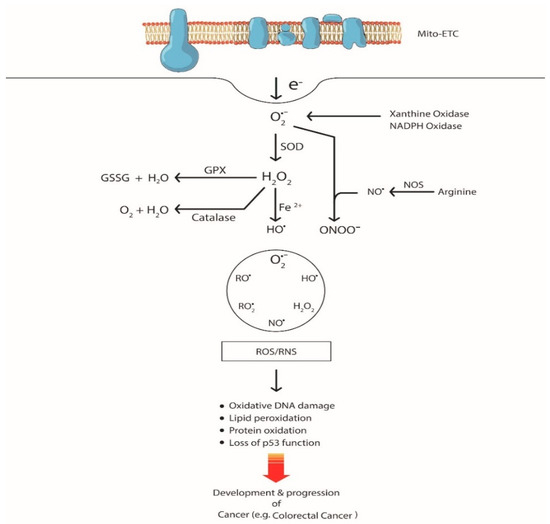
Cancers, Vol. 12, Pages 3336: The Role of Oxidative Stress and Its Counteractive Utility in Colorectal Cancer (CRC)

Alexandros G.Sfakianakis shared this article with you from Inoreader
Μέσω Cancers

cancers-12-03336-g001-550.jpg

Cancers, Vol. 12, Pages 3336: The Role of Oxidative Stress and Its Counteractive Utility in Colorectal Cancer (CRC)

Cancers doi: 10.3390/cancers12113336

Authors: Debasish Basak Mohammad Nasir Uddin Jake Hancock

An altered redox status accompanied by an elevated generation of reactive oxygen/nitrogen species (ROS/RNS) has been implicated in a number of diseases including colorectal cancer (CRC). CRC, being one of the most common cancers worldwide, has been reported to be associated with multiple environmental and lifestyle factors (e.g., dietary habits, obesity, and physical inactivity) and harboring heightened oxidative stress that results in genomic instability. Although under normal condition ROS regulate many signal transduction pathways including cell proliferation and survival, overwhelming of the antioxidant capacity due to metabolic abnormalities and oncogenic signaling leads to a redox adaptation response that imparts drug resistance. Nevertheless, excessive reliance on elevated production of ROS makes the tumor cells increasingly vulnerable to further ROS insults, and the abolition of such drug resistance through redox perturbation could be instrumental to preferentially elimin ate them. The goal of this review is to demonstrate the evidence that links redox stress to the development of CRC and assimilate the most up-to-date information that would facilitate future investigation on CRC-associated redox biology. Concomitantly, we argue that the exploitation of this distinct biochemical property of CRC cells might offer a fresh avenue to effectively eradicate these cells.

View on the web

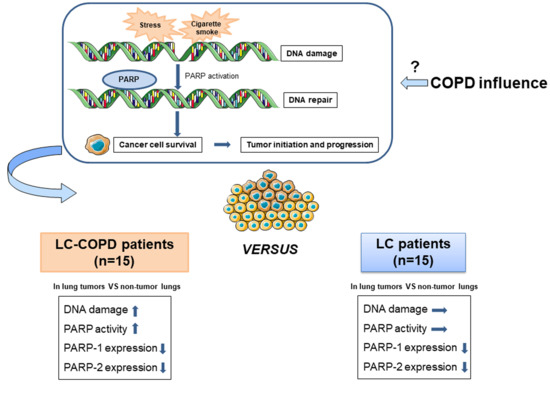
Cancers, Vol. 12, Pages 3333: Increased PARP Activity and DNA Damage in NSCLC Patients: The Influence of COPD

Alexandros G.Sfakianakis shared this article with you from Inoreader
Μέσω Cancers

cancers-12-03333-ag-550.jpg

Cancers, Vol. 12, Pages 3333: Increased PARP Activity and DNA Damage in NSCLC Patients: The Influence of COPD

Cancers doi: 10.3390/cancers12113333

Authors: Jun Tang Víctor Curull Xuejie Wang Coral Ampurdanés Xavier Duran Lara Pijuan Alberto Rodríguez-Fuster Rafael Aguiló José Yélamos Esther Barreiro

(1) Background: Lung cancer (LC) is a major leading cause of death worldwide. Poly (ADP-ribose) polymerase (PARP)-1 and PARP-2 are key players in cancer. We aimed to assess PARP-1 and PARP-2 expression and activity and DNA damage in tumors and non-tumor lungs from patients with/without chronic obstructive pulmonary disease (COPD). (2) Methods: Lung tumor and non-tumor specimens were obtained through video-assisted thoracoscopic surgery (VATS) in LC patients with/without underlying COPD (two groups of patients, n = 15/group). PARP-1 and PARP-2 expression (ELISA), PARP activity (PARP colorimetric assay kit) and DNA damage (immunohistochemistry) levels were identified in all samples. (3) Results: Both PARP-1 and PARP-2 expression levels were significantly lower in lung tumors (irrespective of COPD)compared to non-tumor specimens, while DNA damage and PARP activity levels significantly increased in lung tumors compared to non-tumor specimens only in LC-COPD patients. PARP-2 expressio n was positively correlated with smoking burden in LC-COPD patients. (4) Conclusions: In lung tumors of COPD patients, an overactivation of PARP enzyme was observed. A decline in PARP-1 and PARP-2 protein expression was seen in lung tumors irrespective of COPD. Other phenotypic features (airway obstruction) beyond cancer may account for the increase in PARP activity seen in the tumors of patients with underlying COPD.

View on the web