Αναζήτηση αυτού του ιστολογίου

Παρασκευή 10 Φεβρουαρίου 2023

Expansile Sphenoid Mycetoma Presenting With Headache and Galactorrhea

alexandrossfakianakis shared this article with you from Inoreader

olo220015f1_1675893422.91333.png?Expires

This case report describes an immunocompetent woman in he r 30s with daily vertex headaches over 13 months duration who developed spontaneous galactorrhea and was diagnosed with noninvasive fungal sinusitis.
View on Web

Osteoradionecrosis of the Jaw Following Proton Radiation Therapy for Head and Neck Cancer

alexandrossfakianakis shared this article with you from Inoreader

ooi220087t1_1675893399.08864.png?Expires

This case series reports the prevalence and clinical char acteristics of osteoradionecrosis of the jaw in patients with oral and oropharyngeal cancer treated with proton radiation therapy.
View on Web

Patterns of Infectious Disease Associated with Injection Drug Use

alexandrossfakianakis shared this article with you from Inoreader
Abstract
Background
Since 2014, multiple outbreaks of HIV among people who inject drugs (PWID) have occurred across the United States along with hepatitis C (HCV), skin and soft tissue infections (SSTI) and infective endocarditis (IE), creating a converging public health crisis.
Methods
We analyzed the temporal patterns of infectious disease and overdose (OD) using a hierarchical Bayesian distributed lag logistic regression model examining the probability that a given geographic area experienced at least one HIV case in a given month as a function of the counts/rates of OD, HCV, SSTI, IE and associated medical procedures at different lagged time periods.
Results
Current-month HIV is associated with increasing HCV cases; abscess incision and drainage, and SSTI cases, in distinct temporal patterns. For example, one additional HCV case occurring 5 and 7 months previously is associated with a 4% increase in the odds of observing at least one current-month HIV case in a given locale (odds ratios: 1.04, 1.04; 90% credible intervals: 1.01-1.10, 1.00-1.09). No such associations were observed for echocardiograms, IE, or OD.
Conclusion
Lagged associations in other infections preceding rises in current-month HIV counts cannot be described as predictive of HIV outbreaks but may point towards newly discovered epidemics of injection drug use and associated clinical sequalae, prompting clinicians to screen patients more carefully for substance use disorder and associated infections.
View on Web

Τετάρτη 8 Φεβρουαρίου 2023

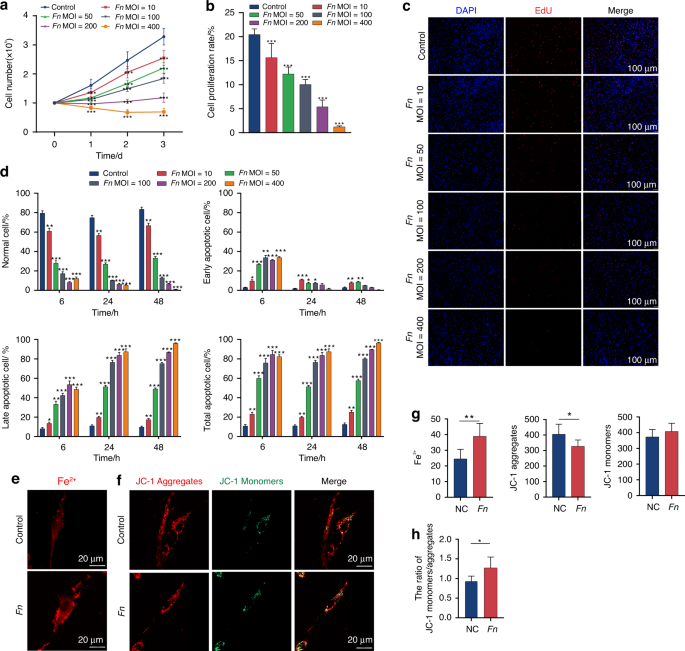
Study of the inflammatory activating process in the early stage of Fusobacterium nucleatum infected PDLSCs

alexandrossfakianakis shared this article with you from Inoreader

41368_2022_213_Fig1_HTML.png

International Journal of Oral Science, Published online: 08 February 2023; doi:10.1038/s41368-022-00213-0

Study of the inflammatory activating process in the early stage of Fusobacterium nucleatum infected PDLSCs
View on Web

Gaps in Depression Symptom Management for Patients With Head and Neck Cancer

alexandrossfakianakis shared this article with you from Inoreader
Gaps in Depression Symptom Management for Patients With Head and Neck Cancer

We sought to understand practice patterns and identify care gaps within a large-scale depression screening program for patients with head and neck cancer. A high proportion of head and neck patients report depressive symptoms, though this triggers a referral in a small number of cases. These data highlight areas for improvement in depression screening care pathways.


Objective

To understand practice patterns and identify care gaps within a large-scale depression screening program for patients with head and neck cancer (HNC).

Study Design

Retrospective cohort study.

Methods

This was a population-based study of adults diagnosed with a HNC between January 2007 and October 2020. Each patient was observed from time of first symptom assessment until end of study date, or death. The exposure of interest was a positive depressive symptom screen on the Edmonton Symptom Assessment System (ESAS). Outcomes of interest included psychiatry/psychology assessment, social work referral, or palliative care assessment. Cause specific hazard models with a time-varying exposure were used to investigate the exposure-outcome relationships.

Results

Of 14,054 patients with HNC, 9016 (64.2%) reported depressive symptoms on at least one ESAS assessment. Within 60 days of first reporting depressive symptoms, 223 (2.7%) received a psychiatry assessment, 646 (7.9%) a social work referral, and 1131 (13.9%) a palliative care assessment. Rates of psychiatry/psychology assessment (HR 3.15 [95% CI 2.67–3.72]), social work referral (HR 1.83 [95% CI 1.64–2.02]), and palliative care assessment (HR 2.34 [95% CI 2.19–2.50]) were higher for those screening positive for depression. Certain patient populations were less likely to receive an assessment including the elderly, rural residents, and those without a prior psychiatric history.

Conclusion

A high proportion of head and neck patients report depressive symptoms, though this triggers a referral in a small number of cases. These data highlight areas for improvement in depression screening care pathways.

Level of Evidence

3 Laryngoscope, 2023

View on Web

Density of antibiotic use and infectious complications in pediatric allogeneic hematopoietic cell transplantationa

alexandrossfakianakis shared this article with you from Inoreader

Abstract

Background

: Antibiotics, while an essential component of supportive care in allogeneic hematopoietic cell transplant (allo-HCT), can have adverse effects and select for antibiotic resistance. Understanding of patterns of use will inform antimicrobial stewardship (AMS) interventions.

Methods

: Retrospective, single center cohort of children undergoing first allo-HCT (n = 125). Antibiotic prescription and infection data were included from the date conditioning was commenced until 30 days post allo-HCT. Antibiotic use was reported as length of therapy (LOT) (number days a patient received an antibiotic) and days of therapy (DOT (aggregating all antibiotics prescribed per day). Infections were classified as microbiologically documented (MDI) or clinically documented infections (CDI).

Results

: At least one course of antibiotics was administered to 124 (99%) patients. The LOT was 636 per 1000 patient days and DOT was 959 per 1000 patient days. The median duration of cumulative antibiotic exposure per patient was 24 days (inter-quartile range (IQR) 20 – 30 days). There were 131 days of fever per 1000 patient days with patients febrile for a median of four days (IQR 1–7 days). Piperacillin-tazobactam was used for 116 (94%) of patients with a LOT of 532 per 1000 patient days. A total of 119 MDI episodes occurred in 74 (59%) patients, including blood stream infection in 30 (24%) and a proven/probable invasive fungal infection in four (3%).

Conclusion

: Pediatric HCT patients receive prolonged courses of broad-spectrum antibiotics relative to the frequency of fever and bacterial infections. This study has identified opportunities for AMS intervention to improve outcomes for our HCT patients.

This article is protected by copyright. All rights reserved

View on Web

Features of cytomegalovirus DNAemia and virus‐specific T‐cell responses in allogeneic hematopoietic stem‐cell transplant recipients during prophylaxis with letermovir

alexandrossfakianakis shared this article with you from Inoreader
Features of cytomegalovirus DNAemia and virus-specific T-cell responses in allogeneic hematopoietic stem-cell transplant recipients during prophylaxis with letermovir


Abstract

Background

There is scarce information on the natural kinetics of cytomegalovirus (CMV) DNAemia and dynamics of CMV-specific T-cell reconstitution in allogeneic hematopoietic transplant recipients (allo-HSCT) undergoing letermovir (LMV) prophylaxis.

Methods

Twelve adult CMV-seropositive high-risk recipients (median age, 53 years; 9 males/3 females) undergoing LMV prophylaxis and 13 non-LMV allo-HSCT controls (median age, 58 years; 7 males/6 females) were included. CMV DNAemia in plasma was monitored by real-time polymerase chain reaction. Preemptive antiviral therapy (PET) was administered upon detection of ≥1500 IU/ml. CMV-specific interferon-gamma (IFN-γ)-producing CD8+ and CD4+ T cells were enumerated by flow cytometry around days +30, +60, and +90 after allo-HSCT. Ex vivo experiments assessing of the potential effect of LMV on CMV-specific T-cell expansion in a single CMV-seropositive donor were also conducted.

Results

Five LMV patients (41.6%) developed CMV DNAemia that cleared spontaneously. Four patients (33.3%) developed CMV DNAemia after LMV cessation, of which two required PET. Nine non-LMV patients (69.2%) developed CMV DNAemia (five required PET). The percentage of LMV and non-LMV patients exhibiting detectable CMV-specific T-cell responses was comparable (7/10 vs. 10/13; p = .71). Nevertheless, median CMV-specific CD4+ and CD8+ T-cell counts were lower in LMV patients by days +60 (p = .006 and .02, respectively) and +90 (p = .08 and .02). Ex vivo, CMV-specific CD8+ T cells expanded to the same level either in the presence (19.8%) or in the absence of LMV (20.6%).

Conclusions

In our series, episodes of CMV DNAemia in LMV patients cleared spontaneously. A diminished degree of CMV-specific T-cell reconstitution in LMV patients compared to non-LMV patients was observed.

View on Web

Parvovirus B19 infection in pediatric allogeneic hematopoietic cell transplantation – Single‐center experience and review

alexandrossfakianakis shared this article with you from Inoreader
Parvovirus B19 infection in pediatric allogeneic hematopoietic cell transplantation – Single-center experience and review


Abstract

Background

Parvovirus B19 (B19V) infection following pediatric hematopoietic cell transplantation (HCT) is a rare complication and available data is scarce. Therefore, we present the experience with B19V Infection in allogeneic pediatric HCT recipients at our transplant center together with a systematic review of the literature.

Methods

Pediatric HCT patients with Parvovirus B19 infection treated at the University Children's Hospital Münster between 1999 and 2021 were retrospectively identified and clinical data were analyzed. Additionally, a systematic MEDLINE search to identify relevant articles was performed.

Results

We identified three out of 445 patients (0.6%) with B19V infection post-transplantation. B19V infection occurred in combination with other complications like Graft-versus-Host disease, additional infections, or autoimmune-mediated hemolysis potentially triggered by B19V. In one patient these complications lead to a fatal outcome.

The review of the literature showed considerable morbidity of B19V infection with the potential for life-threatening complications. Most patients were treated by red blood cell transfusion and intravenous immunoglobulins (IVIG) with a high succession rate.

Conclusion

Symptomatic B19V infection following HCT remains a rare but potentially challenging complication. A causal antiviral therapy does not exist as well as general recommendations on dosage and duration of IVIG therapy. Despite this, most patients are treated successfully with these measures. Additionally, transmission via blood or stem cell products is also rare and no general recommendations on B19V screenings exist.

View on Web

Genomic profiling and prognostic factors of H3 K27M‐mutant spinal cord diffuse glioma

alexandrossfakianakis shared this article with you from Inoreader
Genomic profiling and prognostic factors of H3 K27M-mutant spinal cord diffuse glioma

In a large cohort (n=77), we characterized the molecular, clinicopathological, and prognostic characteristics of H3 K27M-mutant spinal cord diffuse glioma. ATRX mutation, CDK6 amplification, RB pathway alteration, a higher number of Copy number variant (CNV) events, chromosome (Chr) 9p deletion, and Chr 10p deletion is associated with worse survival. Glioblastoma histological type and a high Ki-67 index (>10%) are associated with a worse prognosis. Interestingly, the histological type, an independent prognostic factor in multivariate Cox regression, can stratify molecular features of H3 K27M-mutant spinal cord glioma, including the RB pathway and PI3K pathway.


Abstract

H3 K27-altered diffuse midline glioma is a highly lethal pediatric-type tumor without efficacious treatments. Recent findings have highlighted the heterogeneity among diffuse midline gliomas with different locations and ages. Compared to tumors located in the brain stem and thalamus, the molecular and clinicopathological features of H3 K27-altered spinal cord glioma are still largely elusive, thus hindering the accurate management of patients. Here we aimed to characterize the clinicopathological and molecular features of H3 K27M-mutant spinal cord glioma in 77 consecutive cases. We found that the H3 K27M-mutant spinal cord glioma, with a median age of 35 years old, had a significantly better prognosis than H3 K27M-mutant brain tumors. We noticed a molecular heterogeneity of H3 K27M-mutant spinal cord astrocytoma via targeted sequencing with 34 cases. TP53 mutation which occurred in 58.8% of cases is mutually exclusive with PPM1D (26%) and NF1 (44%) mutation s. The TP53-mutant cases had a significantly higher number of copy number variants (CNV) and a marginally higher proportion of pediatric patients (age at diagnosis <18 years old, p = 0.056). Cox regression and Kaplan–Meier curve analysis showed that the higher number of CNV events (≥3), chromosome (Chr) 9p deletion, Chr 10p deletion, ATRX mutation, CDK6 amplification, and retinoblastoma protein (RB) pathway alteration are associated with worse survival. Cox regression analysis with clinicopathological features showed that glioblastoma histological type and a high Ki-67 index (>10%) are associated with a worse prognosis. Interestingly, the histological type, an independent prognostic factor in multivariate Cox regression, can also stratify molecular features of H3 K27M-mutant spinal cord glioma, including the RB pathway, KRAS/PI3K pathway, and chromosome arms CNV. In conclusion, although all H3 K27M-mutant spinal cord d iffuse glioma were diagnosed as WHO Grade 4, the histological type, molecular features representing chromatin instability, and molecular alterations associated with accelerated cell proliferative activity should not be ignored in clinical management.

View on Web

Τρίτη 7 Φεβρουαρίου 2023

Adjuvant Radiation and Survival Following Surgical Resection of Sinonasal Adenocarcinoma

alexandrossfakianakis shared this article with you from Inoreader
Adjuvant Radiation and Survival Following Surgical Resection of Sinonasal Adenocarcinoma

Sinonasal adenocarcinoma is a rare primary malignancy treated with surgical resection with or without adjuvant radiotherapy. In this study, we saw that radiation therapy may not have an attributable survival benefit.


Objectives

This study aims to investigate the utility of adjuvant radiation in patients who undergo surgical resection for the management of node-negative sinonasal adenocarcinoma (SNAC).

Study Design

Retrospective database review.

Methods

The 2004–2016 National Cancer Data Base (NCDB) was used to extract patients with surgically resected node-negative SNAC. Kaplan–Meier survival analysis and Cox-Proportional Hazards Modelling were used to analyze the impact of adjuvant radiation on overall survival (OS) following surgery.

Results

349 patients with SNAC underwent surgical resection. Of these patients, 154 (44.1%) received adjuvant radiotherapy (RT). Although there was no significant difference in race, age, or sex of those receiving RT, those receiving RT have more advanced diseases and are more likely to have positive margins. Kaplan Meier analysis showed no significant difference in 5-year OS in patient who received adjuvant RT in comparison to those who underwent surgical resection alone (65.7% vs. 72.6%, respectively; p = 0.378). In addition, when looking at only patients with positive margins, 5-year OS still did not have a significant difference (73.8% vs. 61.6%, respectively; p = 0.101). Only patients with clinical AJCC T4 showed a statistically significant survival benefit with adjuvant RT (56.9% vs. 29.9%, respectively; p = 0.009).

Conclusions

Adjuvant RT does not appear to provide a significant survival benefit in patients with resected SNAC, with the exception of those with clinically AJCC T4 disease.

Level of Evidence

4 Laryngoscope, 2023

View on Web