Αναζήτηση αυτού του ιστολογίου

Κυριακή 19 Ιουνίου 2022

African American race as a risk factor associated with a second primary lung cancer after initial primary head and neck cancer

alexandrossfakianakis shared this article with you from Inoreader

Abstract

Background

Initial primary head and neck cancer (IPHNC) is associated with second primary lung cancer (SPLC). We studied this association in a population with a high proportion of African American (AA) patients.

Methods

Patients with IPHNC and SPLC treated between 2000 and 2017 were reviewed for demographic, disease, and treatment-related characteristics and compared to age-and-stage-matched controls without SPLC. Logistic and Cox regression models were used to analyze the relationship of these characteristics with the development of SPLC and overall survival (OS).

Results

Eighty-seven patients and controls were compared respectively. AA race was associated with a significantly higher risk of developing SPLC (OR 2.92, 95% CI 1.35–6.66). After correcting for immortal time bias, patients with SPLC had a significantly lower OS when compared with controls (HR 0.248, 95% CI 0.170–0.362).

Conclusions

We show that AA race is associated with an increased risk of SPLC after IPHNC; reasons of this increased risk warrant further investigation.

View on Web

Effect of new biological patch in repairing intrauterine adhesion and improving clinical pregnancy outcome in infertile women: study protocol for a randomized controlled trial

alexandrossfakianakis shared this article with you from Inoreader

13063.jpg

Endometrial fibrosis caused by intrauterine adhesion (IUA) can lead to hypomenorrhea, amenorrhea, and even infertility and abortion. The postoperative recurrence rate of severe IUA remains high, giving rise to...
View on Web

Old age amyotrophic lateral sclerosis and limbic TDP‐43 pathology

alexandrossfakianakis shared this article with you from Inoreader
Old age amyotrophic lateral sclerosis and limbic TDP-43 pathology

Regional pTDP-43 lesion burden in young-ALS and old-ALS box plots shows regional TDP-43 burden in young-, middle-, and old-ALS. The line in box plots represents the median. Old-ALS cases had greater TDP-43 burden in amygdala (p < 0.001), dentate gyrus (p < 0.05), CA1 (p < 0.01), subiculum (p < 0.01), and entorhinal cortex (p < 0.01) compared with young-ALS and middle-ALS. There is no difference between the three groups in the middle frontal cortex and white matter of the parahippocampal gyrus. ***p < 0.001, **p < 0.05, *p < 0.01. p Values are from one-way ANOVA


Abstract

This study aimed to assess and compare the burden of transactive response DNA-binding protein of 43 kDa (TDP-43) pathology and clinical features of amyotrophic lateral sclerosis (ALS) in three age groups. All cases were from the Mayo Clinic brain bank for neurodegenerative disorders and most were followed longitudinally in the ALS Clinic. Cases with moderate-to-severe Alzheimer's disease neuropathological change were excluded. The 55 cases included in the study were divided into three groups by age at death: 75 years or older (old-ALS, n = 8), 64–74 years (middle-ALS, n = 23), and 63 years or younger (young-ALS, n = 24). Clinical features, including disease duration, initial symptoms, and ALS Cognitive Behavior Score (ALS-CBS), were summarized. Sections of paraffin-embedded tissue from the motor cortex, basal forebrain, medial temporal lobe, and middle frontal gyrus were processed for phospho-TDP-43 immunohistochemist ry. The burden of TDP-43 pathology was analyzed using digital image analysis. The TDP-43 burden in the limbic system (i.e., amygdala, dentate gyrus and CA1 sector of the hippocampus, subiculum, and entorhinal cortex) was greater in old-ALS than in young-ALS and middle-ALS. TDP-43 burden in the middle frontal gyrus was sparse and did not differ between the three groups. The average of ALS-CBS was not different between the three groups. The present study shows that the amygdala and hippocampus are vulnerable to TDP-43 pathology in older patients with ALS. We discuss the evidence for and against this pathology being related to concurrent limbic-predominant, age-related TDP-43 encephalopathy neuropathologic change.

View on Web

Prevalence, outcome, and prevention of congenital cytomegalovirus infection in neonates born to women with preconception immunity (CHILd study).

alexandrossfakianakis shared this article with you from Inoreader

cid_ogimage.png

Abstract
Background
Human cytomegalovirus (HCMV) is the leading infectious cause of congenital disabilities. We designed a prospective study to investigate the rate, outcome and risk factors of congenital cytomegalovirus infection (cCMV) in neonates born to immune women, and the potential need and effectiveness of hygiene recommendations in this population.
Methods
The study (NCT03973359) was composed of 2 sequential parts: an epidemiology (Part 1) and a prevent ion (Part 2) study. Performance of Part 2 depended upon a cCMV rate > 0.4%. Women enrolled in Part 1 did not receive hygiene recommendations. Newborns were screened by HCMV DNA testing in saliva and cCMV was confirmed by urine testing.
Results
Saliva swabs were positive for HCMV DNA in 45/9661 newborns and cCMV was confirmed in 18 cases. The rate of cCMV was 0.19% (95% CI: 0.11-0.29%), and three out of 18 infants with cCMV had symptoms of CMV at birth. Age, nationality, occupation and contact with children were similar between mothers of infected and non-infected newborns. Twin pregnancy (OR: 7.2; 95% CI 1.7-32.2; p = 0.037) and maternal medical conditions (OR: 3.9; 95% CI: 1.5-10.1; p = 0.003) appeared associated with cCMV. Given the rate of cCMV lower than expected, the prevention part of the study was cancelled.
Conclusion
Newborns from women with preconception immunity have a low rate of cCMV, which appears to be mostly due to reactivation of the latent virus. Therefore, serological screening in childbearing age would be pivotal to identify HCMV-seropositive women, whose newborns have a low risk of cCMV.
View on Web

Life-Threatening Complications of Influenza versus COVID-19 in U.S. Children

alexandrossfakianakis shared this article with you from Inoreader

cid_ogimage.png

ABSTRACT
Background
Clinical differences between critical illness from influenza infection versus coronavirus disease 2019 (COVID-19) have not been well characterized in pediatric patients.
Methods
We compared U.S. children (8 months to 17 years) admitted to the intensive care or high acuity unit with influenza (17 hospitals, 12/19/2019–3/9/2020) or COVID-19 (52 hospitals, 3/15/2020–12/31/2020). We compared demographics, underlying conditions, clinical prese ntation, severity, and outcomes. Using mixed-effects models, we assessed the odds of death or requiring life-support for influenza versus COVID-19 after adjustment for age, sex, race and Hispanic origin, and underlying conditions including obesity.
Results
Children with influenza (n = 179) were younger than those with COVID-19 (n = 381; median 5.2 vs. 13.8 years), less likely to be non-Hispanic black (14.5% vs. 27.6%) or Hispanic (24.0% vs. 36.2%), and less likely to have ≥1 underlying condition (66.4% vs. 78.5%) or be obese (21.4% vs. 42.2%). They were similarly likely to require invasive mechanical ventilation (both 30.2%), vasopressor support (19.6% and 19.9%), or extracorporeal membrane oxygenation (2.2% and 2.9%). Four children with influenza (2.2%) and 11 children with COVID-19 (2.9%) died. The odds of death or requiring life-support in children with influenza vs. COVID-19 were s imilar (adjusted odds ratio, 1.30 [95% CI: 0.78–2.15; P = 0.32]). Median duration of hospital stay was shorter for influenza than COVID-19 (5 versus 7 days).
Conclusions
Despite differences in demographics and clinical characteristics of children with influenza or COVID-19, the frequency of life-threatening complications was similar. Our findings highlight the importance of implementing prevention measures to reduce transmission and disease severity of influenza and COVID-19.

View on Web

COVID-19 Severity among Women of Reproductive Age with Symptomatic Laboratory-Confirmed SARS-CoV-2 by Pregnancy Status – United States, Jan 1, 2020 – Dec 25, 2021

alexandrossfakianakis shared this article with you from Inoreader

cid_ogimage.png

Abstract
Background
Information on the severity of COVID-19 attributable to the Delta variant in the United States among pregnant people is limited. We assessed the risk for severe COVID-19 by pregnancy status in the period of Delta variant predominance compared with the pre-Delta period.
Methods
Laboratory-confirmed SARS-CoV-2 infections among symptomatic women of reproductive age (WRA) were assessed. We calculated adjusted risk ratios for severe disease includi ng intensive care unit (ICU) admission, receipt of invasive ventilation or extracorporeal membrane oxygenation (ECMO), and death comparing the pre-Delta period (January 1, 2020 – June 26, 2021) and the Delta period (June 27, 2021 – December 25, 2021) for pregnant and nonpregnant WRA.
Results
Compared with the pre-Delta period, the risk of ICU admission during the Delta period was 41% higher (adjusted risk ratio [aRR] 1.41; 95% CI, 1.17-1.69) for pregnant WRA and 9% higher (aRR 1.09; 95% CI, 1.00-1.18) for nonpregnant WRA. The risk of invasive ventilation or ECMO was higher for pregnant (aRR 1.83; 95% CI, 1.26-2.65) and nonpregnant WRA (aRR 1.34; 95% CI, 1.17-1.54) in the Delta period. During the Delta period, the risk of death was 3.33 (95% CI, 2.48-4.46) times the risk in the pre-Delta period among pregnant WRA and 1.62 (95% CI, 1.49-1.77) among nonpregnant WRA.
Conclusions
Compared with the pre-Delta period, pregnant and nonpregnant WRA were at increased risk for severe COVID-19 in the Delta period.
View on Web

Vaccine effectiveness of CanSino (Adv5-nCoV) COVID-19 vaccine among childcare workers – Mexico, March–December 2021

alexandrossfakianakis shared this article with you from Inoreader
Abstract
Background
Beginning in March 2021, Mexico vaccinated childcare workers with a single-dose CanSino Biologics (Adv5-nCoV) COVID-19 vaccine. Although CanSino is currently approved for use in 10 Latin American, Asian, and European countries, little information is available about its vaccine effectiveness (VE).
Methods
We evaluated CanSino VE within a childcare worker cohort that included 1,408 childcare facilities. Participants were followed during March–December 2021 and tested through SARS-CoV-2 RT-PCR or rapid antigen test if they developed any symptom compatible with COVID-19. Vaccination status was obtained through worker registries. VE was calculated as 100% × (1−hazard ratio for SARS-CoV-2 infection in fully vaccinated vs. unvaccinated participants), using an Andersen-Gill model adjusted for age, sex, state, and local viral circulation.
Results
The cohort included 43,925 persons who were mostly (96%) femal e with a median age of 32 years; 37,646 (86%) were vaccinated with CanSino. During March–December 2021, 2,250 (5%) participants had laboratory-confirmed COVID-19, of whom 25 were hospitalized and 6 died. Adjusted VE was 20% (95% CI = 10–29%) against illness, 76% (42–90%) against hospitalization, and 94% (66–99%) against death. VE against illness declined from 48% (95% CI = 33–61) after 14–60 days following full vaccination to 20% (95% CI = 9–31) after 61–120 days.
Conclusions
CanSino vaccine was effective at preventing COVID-19 illness and highly effective at preventing hospitalization and death. It will be useful to further evaluate duration of protection and assess the value of booster doses to prevent COVID-19 and severe outcomes.
View on Web

The Staphylococcus aureus Network Adaptive Platform Trial protocol: New tools for an old foe

alexandrossfakianakis shared this article with you from Inoreader
Abstract
Staphylococcus aureus bloodstream (SAB) infection is a common and severe infectious disease, with a 90-day mortality of 15-30%. Despite this, fewer than 3000 people have been randomised into clinical trials of treatments for SAB infection. The limited evidence base partly results from clinical trials for SAB infections being difficult to complete at scale using traditional clinical trial methods. Here we provide the rationale and framework for an adaptive platform trial applied to SAB infections. We detail the design features of the Staphylococcus aureus Network Adaptive Platform (SNAP) trial that will enable multiple questions to be answered as efficiently as possible. The SNAP trial will commence enrolling patients across multiple countries in 2022 with an estimated target sample size of 7000 participants. This approach may serve as an exemplar to increase efficienc y of clinical trials for other infectious diseases syndromes.
View on Web

Population immunity to pre-Omicron and Omicron SARS-CoV-2 variants in US states and counties through December 1, 2021

alexandrossfakianakis shared this article with you from Inoreader
Abstract
Background
Both SARS-CoV-2 infection and COVID-19 vaccination contribute to population-level immunity against SARS-CoV-2. This study estimates the immunological exposure and effective protection against future SARS-CoV-2 infection in each US state and county over 2020-2021, and how this changed with the introduction of the Omicron variant.
Methods
We used a Bayesian model to synthesize estimates of daily SARS-CoV-2 infections, vaccination data and estimates of the relative rates of vaccination conditional on infection status to estimate the fraction of the population with (i) immunological exposure to SARS-CoV-2 (ever infected with SARS-CoV-2 and/or received one or more doses of a COVID-19 vaccine), (ii) effective protection against infection, and (iii) effective protection against severe disease, for each US state and county from January 1, 2020, to December 1, 2021.
Results
The estimated percentage of the US populati on with a history of SARS-CoV-2 infection or vaccination as of December 1, 2021, was 88.2% (95% Credible Interval (CrI): 83.6%-93.5%). Accounting for waning and immune escape, effective protection against the Omicron variant on December 1, 2021, was 21.8% (95%CrI: 20.7%-23.4%) nationally and ranged between 14.4% (95%CrI: 13.2%-15.8%, West Virginia) to 26.4% (95%CrI: 25.3%-27.8%, Colorado). Effective protection against severe disease from Omicron was 61.2% (95%CrI: 59.1%-64.0%) nationally and ranged between 53.0% (95%CrI: 47.3%-60.0%, Vermont) and 65.8% (95%CrI: 64.9%-66.7%, Colorado).
Conclusions
While over four-fifths of the US population had prior immunological exposure to SARS-CoV-2 via vaccination or infection on December 1, 2021, only a fifth of the population was estimated to have effective protection against infection with the immune-evading Omicron variant.
View on Web

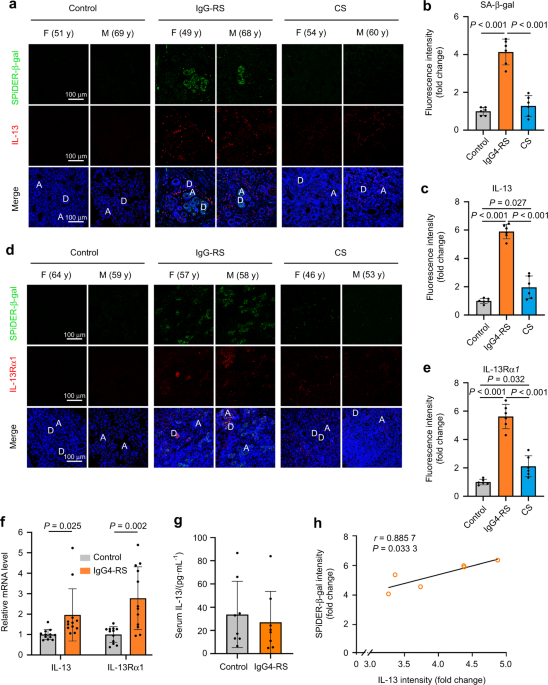
Interleukin-13 promotes cellular senescence through inducing mitochondrial dysfunction in IgG4-related sialadenitis

alexandrossfakianakis shared this article with you from Inoreader

41368_2022_180_Fig1_HTML.png

View on Web